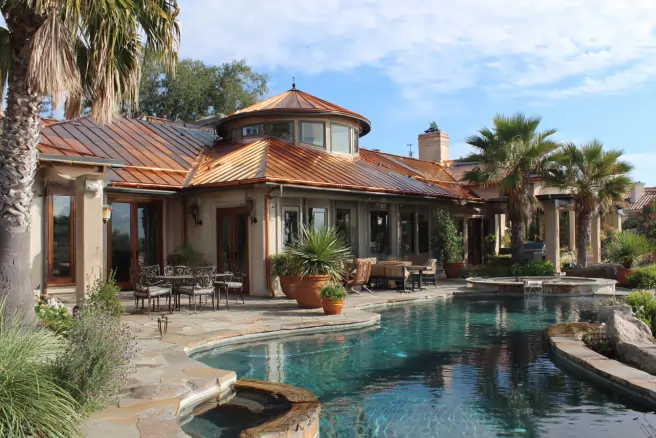
San Diego home with copper roof

Copper roofs are a premium roofing option known for their durability, aesthetic appeal, and impressive lifespan. Made from a natural, recyclable material, copper roofing has been used in architecture for centuries due to its unique combination of beauty and functionality. In this section, we’ll dive into what makes copper roofs stand out and why they are an excellent choice for homeowners seeking long-term value.

Benefits of Choosing a Metal Roofing Company San Diego, CA for Your Copper Roof

A copper roof is crafted from sheets or tiles of copper metal that cover the structure of your home. Over time, the surface of the copper develops a patina—a natural protective layer that evolves into shades of green or turquoise. This visual transformation not only adds character but also enhances its resistance to environmental elements like corrosion.

Benefits of Hiring a Metal Roofing Contractor San Diego for Your Copper Roof

1. Longevity

  • Copper roofs can last over 100 years when properly installed and maintained.
  • Unlike asphalt shingles or other materials that may require frequent replacement, copper ages gracefully without losing its structural integrity.

2. Exceptional Durability

  • Copper is resistant to harsh weather conditions such as heavy rain, snow, high winds, and hail.
  • It does not warp or crack under extreme temperatures.
  • The patina it develops serves as an extra layer of protection against environmental damage.

3. Low Maintenance

  • Once installed, copper requires minimal upkeep compared to other roofing materials.
  • The natural patina protects it from rust and corrosion without requiring chemical treatments.

4. Aesthetic Appeal

  • Copper’s distinctive appearance adds elegance and sophistication to any property.
  • Over time, the patina achieves a timeless look often associated with historical landmarks or upscale properties.

5. Eco-Friendly Material

  • Copper is fully recyclable at the end of its lifecycle.
  • Its production generates less waste compared to synthetic materials like asphalt shingles.

Why a Metal Roofer in San Diego Recommends Copper Roofs Over Other Materials

Feature Copper Roofs Asphalt Shingles Steel Roofs
Lifespan 80–100+ years 20–30 years 40–70 years
Maintenance Required Minimal Moderate Low
Weather Resistance Excellent Moderate High
Environmental Impact Fully Recyclable Non-recyclable Partially Recyclable
Cost High Initial Investment Affordable Initial Cost Moderate

Benefits of Choosing a San Diego Standing Seam Metal Roof

Copper roofs are particularly suitable for: 1. High-End Homes: For luxury properties where aesthetics greatly influence resale value. 2. Historic Restorations: To maintain architectural authenticity in older buildings. 3. Coastal Areas: These roofs withstand salt air corrosion better than most other materials. 4. Eco-Conscious Homeowners: Ideal for those seeking sustainable building solutions.

By investing in a copper roof, you’re not just opting for functional superiority but also enhancing the visual appeal and long-term resilience of your home—a decision that pays off both practically and aesthetically over decades. However, also make sure you hire a professional San Diego metal roofing contractor like https://www.sw-metalroofing.com for your metal roof installation. It is important to go with specialists who know what they are doing with an investement like this.

Exploring the Different Types of Copper Roofs for Your Property

Copper roofing is a timeless and elegant choice that combines durability with unmatched aesthetic appeal. When considering a copper roof, it’s essential to understand the different types available and their unique attributes. Here’s a detailed exploration of the primary types of copper roofs to help you make an informed decision.

1. Continuous Copper Roofing

Continuous copper roofing, often referred to as “sheet copper roofing,” involves installing large sheets of copper across the roof’s surface. This type is known for its sleek, uninterrupted look.

Key Features:
– Custom-fabricated to fit your roof’s dimensions perfectly. – Reduces the risk of leaks due to minimal seams. – Ideal for complex or uniquely shaped roofs.

Best Suited For: High-end properties or buildings seeking a clean, modern aesthetic with long-term durability.

2. Standing Seam Copper Roofing

Standing seam copper roofs are characterized by raised seams that lock together, creating defined lines across the surface. These seams provide extra protection against water penetration.

Advantages:
– Offers superior waterproofing capabilities. – Enhances the architectural style with vertical lines. – Easy maintenance due to its modular structure.

Pros Cons
Highly resistant to weathering Higher initial installation cost
Low maintenance requirements Requires professional installation

This type is frequently used on residential homes, churches, and commercial properties looking for both function and form.

3. Copper Shingles

Copper shingles are small tiles made from copper that can be arranged in various patterns to create visually stunning designs on your roof.

Why Choose Copper Shingles?
– Offer unique design flexibility; can mimic traditional shingle aesthetics while using durable materials. – Easier replacement options if damage occurs in isolated areas. – Suitable for homeowners seeking a blend of tradition and modernity.

This option works well on smaller homes or structures requiring intricate detailing.

4. Pre-patinated Copper Roofing

Pre-patinated copper roofing features sheets or tiles treated beforehand to develop the greenish patina associated with aged copper roofs naturally over time.

Benefits of Pre-patinated Copper Roofing:
– Instantly achieves the vintage look many desire without waiting decades for natural aging. – Provides excellent resistance against corrosion and environmental degradation.

It’s a great solution for buildings aiming to achieve an antique look immediately after installation.

5. Flat Seam Copper Panels

Flat seam panels are another option where interlocking sections create flat surfaces across the roof’s plane. These are best suited for low-sloped or curved roofs due to their adaptability.

Advantages of Flat Seam Panels Ideal Applications
Lightweight yet strong Domed structures
Flexible design options Low-slope architectural styles

While it requires meticulous installation, flat seam panels offer long-lasting performance when properly maintained.

Choosing the Right Type of Copper Roof

  1. For Sleek Modern Designs: Opt for continuous or standing seam systems.
  2. For Traditional Aesthetics: Consider shingles or pre-patinated options.
  3. For Unique Roof Shapes: Look into flat seam systems or custom-fabricated solutions.

Each type comes with its own set of benefits tailored to different needs, ensuring there’s an option suitable for every property owner’s preferences and requirements when investing in a quality copper roof system.

Exploring the Different Types of Copper Roofs for Your Property

Copper roofs are renowned for their elegance, durability, and timeless appeal. However, not all copper roofs are created equal. Various types of copper roofing styles and systems are available on the market, each with its own advantages and applications. Understanding these options can help you choose the perfect type of copper roof for your property.

1. Standing Seam Copper Roofs

Standing seam copper roofs are one of the most popular options due to their clean, modern appearance and excellent durability. The design features vertical panels joined by raised seams, which prevent water infiltration and ensure superior weather resistance.

Benefits: – Sleek aesthetics suitable for both traditional and contemporary homes. – Superior protection against leaks due to its interlocking panel system. – Allows thermal expansion without compromising the structure.

Applications:
Often used in high-end residential properties or buildings requiring long-lasting performance.

2. Copper Shingles

Copper shingles combine functionality with a unique aesthetic appeal. They come in small, flat pieces that interlock or overlap to create a durable yet stylish roof.

Benefits: – Lightweight and easy to install compared to full sheets. – Offers excellent flexibility for complex roof designs. – Develops a natural patina over time, enhancing its visual appeal.

Applications:
Ideal for properties with intricate roof shapes or homeowners seeking a rustic or artisanal look.

3. Flat Lock Copper Panels

Flat lock panels offer a sleek finish with tightly locked seams. These panels are custom-fabricated to fit various roof shapes and designs.

Key Features Description
Installation Style Overlapping flat sheets secured in place
Aesthetic Appeal Creates a smooth, continuous surface
Maintenance Minimal due to its watertight nature

Applications:
Widely used on low-slope roofs or architectural projects where smooth surfaces are prioritized.

4. Corrugated Copper Roofing

This style features wavy or ridged panels that lend themselves well to unique architectural designs. Corrugated copper roofing is particularly suited for structures needing enhanced rigidity and strength.

Advantages: – High structural integrity ideal for storm-prone regions. – Cost-effective option compared to more complex systems. – Provides good drainage performance due to its ridged profile.

Applications:
Commonly seen on barns, outbuildings, or modern industrial-inspired designs seeking bold textures.

5. Copper Tiles

Copper tiles mimic the classic look of clay tiles but come with all the benefits of copper as a material. These tiles can be customized into various shapes including barrel-style or flat configurations.

Advantages: – Combines traditional aesthetics with modern functionality. – Resistant to mold, pests, and extreme weather conditions. – Adds significant curb appeal to Mediterranean-style homes or historic restorations.

Comparing Different Types of Copper Roofs

Type Key Feature Best For
Standing Seam Modern & minimalistic design High-end residential properties
Copper Shingles Rustic & artisanal aesthetics Complex-shaped roofs
Flat Lock Panels Tightly locked smooth surface Low-slope architectural projects
Corrugated Copper Roofing Wavy/ridged panel designs Strong drainage & storm resistance
Copper Tiles Classic clay tile appearance Mediterranean/historic themes

Selecting the right type of copper roof depends on your property’s architecture, your budget, and personal preferences in terms of aesthetics and performance requirements. By exploring these options carefully, you can invest in a copper roof that enhances both form and function while standing the test of time.

How Copper Roofs Offer Superior Performance Against Extreme Weather Conditions

Copper roofs are renowned for their ability to withstand extreme weather conditions, making them an excellent long-term investment for homeowners. Their natural properties, combined with durability and resilience, allow them to perform exceptionally well in a variety of challenging climates. Let’s explore how copper roofs excel in diverse weather conditions and why they’re a superior choice compared to other roofing materials.

Resilience Against Heavy Rainfall and Snow

Copper roofs are impermeable to water, providing exceptional protection against leaks caused by heavy rainfall. Additionally, copper’s smooth surface naturally encourages efficient runoff, minimizing the risk of standing water that can lead to structural damage over time.

  • Prevents water pooling or leakage.
  • Resists rust and corrosion due to its non-ferrous nature.
  • Reduces the likelihood of mold or mildew growth beneath the roof material.

In snowy climates, copper’s thermal conductivity helps melt snow quickly when exposed to sunlight. This prevents excessive snow accumulation on the roof, reducing strain on the structure.

Endurance in High Wind Situations

Copper roofs can withstand strong winds better than most conventional roofing materials due to their weight and sturdy installation design. When properly installed with interlocking panels or specialized fasteners, a copper roof can resist wind uplift even during significant storms or hurricanes.

Material Wind Resistance
Copper Roofing Up to 140 mph or more*
Asphalt Shingles Typically up to 110 mph

*Note: Wind resistance depends on proper installation techniques.

Superior Performance in Hailstorms

One of copper’s standout qualities is its toughness against impact from hailstorms. Unlike traditional shingles that may crack or dent under heavy impact, copper is less prone to visible damage because of its malleability and strength. Over time, this helps homeowners save money on repairs caused by hail-related damage.

Tolerance for Extreme Temperatures

  • In hot climates: Copper reflects sunlight rather than absorbing heat like asphalt shingles do. This natural reflectivity reduces heat transfer into your home, improving energy efficiency.
  • In cold climates: Copper maintains structural integrity without becoming brittle in freezing temperatures.

Additionally, copper expands and contracts minimally with temperature fluctuations compared to other metals like aluminum or steel. This prevents cracking or warping over time.

Resistance Against Fire Hazards

A key safety advantage of copper roofs is their fire resistance. Classified as a non-combustible material (Class A fire rating), copper does not ignite when exposed to embers or flames from nearby wildfires. For homes located in fire-prone areas, this feature is critical for enhanced safety and peace of mind.

Key Takeaways

  • Exceptional waterproofing abilities against rain and snow.
  • Superior wind resistance with proper installation techniques.
  • Long-lasting durability under hail impact.
  • Optimal performance across a broad range of temperatures.
  • Non-combustible properties ensure fire safety.

For homeowners seeking a reliable roofing solution that combines aesthetics with unmatched performance under harsh environmental factors, copper emerges as an unparalleled choice worth considering.

How Copper Roofs Offer Superior Performance Against Extreme Weather Conditions

Copper roofs are renowned for their ability to withstand harsh weather conditions, making them a preferred choice for homeowners and commercial buildings. From heavy rain to snow, high winds, and intense sunlight, copper stands as one of the most durable roofing materials available.

Resistance to Heavy Rain and Moisture

One of the major advantages of copper roofs is their natural resistance to water. Copper does not rust like other metals because it forms a protective patina over time, which acts as a barrier against corrosion. This feature makes it an excellent option in areas prone to frequent rainfall or high humidity levels.

Here’s why copper excels in wet conditions: – Non-corrosive properties: The patina prevents oxidation that could weaken other materials. – Waterproofing: Proper installation ensures no seams or gaps allow water penetration. – Low maintenance: Unlike shingles, copper does not degrade due to mold or algae growth.

Withstanding High Winds and Storms

Copper roofing is well-known for its ability to resist strong winds and storms due to its durability and secure installation process. When installed correctly, copper panels are tightly fastened, reducing the likelihood of damage from gusty conditions.

Key factors contributing to wind resistance include: – Weight of material: The heaviness of copper prevents dislodging during storms. – Custom fitting: Panels are often customized for a tight fit over underlying structures. – Strength under pressure: Copper can handle extreme forces without cracking or bending.

Snow and Ice Management

For homes located in colder climates, copper roofs excel at managing snow and ice accumulation. Their smooth surface allows snow to slide off easily, preventing hazardous build-ups that could harm the roof structure. Additionally, copper conducts heat efficiently, helping melt ice faster than asphalt shingles or tiles.

Benefits in snowy regions: – Minimized risk of ice dams forming at edges. – Reduced structural stress caused by heavy snow loads. – Longer lifespan due to fewer freeze-thaw cycles affecting the material.

Protection Against Intense Sunlight

In areas prone to intense sunlight and heat exposure, copper roofs maintain their structural integrity exceptionally well. Unlike traditional materials like asphalt shingles that can warp or fade under prolonged UV exposure, copper retains its appearance while reflecting much of the sun’s heat away from your home or building.

Advantages under extreme sunlight: – Energy efficiency through reduced heat absorption. – Patina development that enhances solar reflectivity over time. – Longevity—copper doesn’t degrade under UV rays like organic-based materials do.

Table: Comparison Between Copper Roofs & Other Roofing Materials in Extreme Weather

Feature Copper Roofs Asphalt Shingles Clay Tiles
Corrosion Resistance High (Patina formation) Low Moderate
Wind Resistance Very High Moderate Moderate
Snow/Ice Management Excellent Poor Good
UV/Heat Durability Excellent Low Moderate
Maintenance Low High Moderate

A Worthy Investment for Harsh Climates

Overall, the superior performance of copper roofs across diverse weather conditions justifies their higher upfront cost. Their unmatched properties—ranging from corrosion resistance in rainfall-heavy areas to efficient handling of sunlight—make them a long-term investment for individuals seeking both style and resilience in roofing solutions.

Six Key Differences Between Luxury Copper Roofing and Regular Shingles

When it comes to roofing materials, the choice between luxury copper roofing and traditional asphalt shingles is more than just a matter of aesthetics. Each option offers unique benefits, costs, and performance characteristics. Below, we explore six key differences that set copper roofs apart from regular shingles.

1. Material Longevity

  • Copper Roofs: Known for their exceptional lifespan, copper roofs can last over 100 years with minimal maintenance. The material naturally develops a patina over time, which acts as a protective layer against corrosion and weathering.
  • Regular Shingles: Asphalt shingles typically last between 20-30 years before requiring replacement. Their lifespan is limited due to wear from UV exposure, water damage, and temperature fluctuations.
Feature Copper Roofing Asphalt Shingles
Lifespan 80–100+ years 20–30 years
Maintenance Needs Low (patina protects) Moderate (may need repairs)

2. Cost Comparison

  • Copper Roofs: Initial costs for copper are significantly higher than asphalt shingles due to material quality and installation complexity.
  • Regular Shingles: Asphalt shingles are one of the most affordable roofing options available; however, they require more frequent replacement or repair, leading to higher long-term costs.

Average Costs per Square Foot: – Copper roof installation: $15–$25 – Asphalt shingle installation: $3–$5

3. Aesthetic Appeal

Copper roofing is often chosen for its upscale appearance and timeless appeal: – The metal develops a greenish patina over time (e.g., the Statue of Liberty), giving homes a unique look. In contrast: – Asphalt shingles come in various colors but lack the character-rich aging process seen in metals like copper.

Six Key Differences Between Luxury Copper Roofing and Regular Shingles

When deciding on the right roofing material for your property, it’s essential to weigh the pros and cons of various options. Copper roofs and regular asphalt shingles are two widely different choices, suited to different needs and preferences. Below, we break down six key differences between luxury copper roofing and standard shingles to help you make an informed decision.

1. Durability and Lifespan

  • Known for its exceptional durability, copper roofs can last over a century with proper maintenance.
  • Resistant to rot, corrosion, insect damage, and fire.
  • Forms a natural patina over time, which protects the metal from further degradation.
  • Typically have a lifespan of 20–30 years depending on material quality.
  • Susceptible to damage from harsh weather conditions (e.g., high winds or hail).
  • Prone to issues like curling, cracking, or granule loss over time.

2. Aesthetic Appeal

  • Offers a distinct architectural appeal with its warm metallic tones that age into a unique greenish-blue patina (verdigris).
  • Often seen as a symbol of luxury and craftsmanship in both modern and traditional designs.
  • Provides basic aesthetics with limited customization options in terms of color or texture.
  • May lack the premium appearance associated with high-end materials like copper or slate.

3. Cost

Feature Copper Roofs Regular Shingles
Initial Installation High ($15–$30/sq ft) Low ($4–$7/sq ft)
Long-Term Value High Moderate-Low
  • Copper roofing has higher upfront costs due to the material’s quality and specialized installation process. However, its long-term durability often offsets these expenses over decades.
  • Asphalt shingles are affordable initially but may require frequent replacements or repairs due to wear-and-tear.

4. Energy Efficiency

  • Reflects sunlight efficiently, reducing heat absorption during summer. This helps lower cooling costs in warm climates.
  • Recyclable at the end of its long lifespan—making it environmentally sustainable.
  • Typically absorb heat more readily due to darker tones and less reflective surfaces.
  • Less eco-friendly as worn-out shingles often end up in landfills.

5. Weather Resistance

  • Withstands extreme weather conditions such as heavy rainfall or snow without structural compromise.
  • Highly resistant to wind uplift when installed properly.
  • Vulnerable to strong winds that can dislodge individual tiles or strips.
  • May require frequent maintenance in areas prone to storms or severe weather fluctuations.

6. Maintenance Requirements

  • Copper Roofs: Minimal maintenance needs:
    • Occasional cleaning of debris such as leaves from valleys or gutters is usually sufficient.
    • Patina formation is natural and doesn’t require intervention unless aesthetics demand polishing or sealing.

Shingle Roofs: Needs inspections for curled edges cracked repairs

Does a Metal Roof Like Copper Increase the Value of Your Home?

Copper roofing is not only a visually striking feature but also an investment that can significantly enhance your home’s market value. Below, we explore the various ways in which copper roofs can contribute to increasing your property’s worth.

1. Exceptional Curb Appeal

  • Make your property stand out in the neighborhood.
  • Attract potential buyers who value premium materials.
  • Create an impression of elegance and sophistication.

Buyers are often willing to pay more for homes with high-end features like copper roofing, making it a valuable addition from both an aesthetic and financial perspective.

2. Higher Durability Equals Increased Value

  • Reduced maintenance costs over time.
  • Peace of mind for prospective buyers.
  • A tangible return on investment when selling your home.

For homeowners looking to avoid frequent roof replacements, a durable material like copper is an appealing selling point.

3. Energy Efficiency Benefits

Copper roofs reflect sunlight effectively, reducing heat absorption during warmer months. This energy efficiency helps lower cooling costs and contributes to sustainability goals—an increasingly important factor among environmentally conscious buyers.

  • Homebuyers may appreciate reduced utility bills associated with energy-efficient materials.
  • An eco-conscious choice like copper roofing further enhances the perceived value of your property.

Additionally, combining copper roofing with proper insulation ensures year-round comfort while maintaining lower energy expenditures.

4. Low Maintenance Costs

A well-installed copper roof requires minimal upkeep compared to other roofing materials prone to rot, mold, or warping. Its natural resistance to corrosion ensures that it ages gracefully without significant intervention.

Feature Benefit
Natural corrosion resistance Prevents rusting and degradation over time
Patina development Protects the roof surface naturally
Lightweight material Reduces strain on structural components

This low-maintenance quality appeals directly to potential buyers who prefer hassle-free ownership, thus elevating their willingness to invest more in such properties.

5. Increased Resale Value

Studies have shown that adding premium upgrades like metal or copper roofing directly increases home resale values by as much as 6%. For luxury homes or historic properties where architectural integrity matters, features like custom copper accents are especially desirable among discerning buyers.

  • The rarity and exclusivity of copper as a roofing material.
  • Enhanced longevity translating into long-term savings for future owners.

When combined with other premium finishes throughout the property, a copper roof enhances overall marketability and justifies higher asking prices during resale negotiations.

By combining aesthetic appeal with practical benefits such as energy efficiency, unmatched durability, and low-maintenance requirements, investing in a copper roof not only elevates your home’s functionality but also bolsters its financial worth in today’s competitive real estate market.


Roof gutter on a new tiled roof Roof gutter on a new tiled roof Copper Roofing stock pictures, royalty-free photos & images

When considering installing a metal roof, such as copper, understanding your options and evaluating key factors is essential to ensure you make an informed decision. Copper roofs are known for their durability, aesthetic appeal, and long-term value. However, making the right choice requires careful thought. Below are some critical considerations to keep in mind when buying a metal roof.

1. Durability and Longevity

One of the major advantages of copper roofing is its exceptional lifespan. Copper roofs can last 50 to over 100 years with minimal maintenance, making them a long-term investment. When assessing its durability:
– Evaluate the thickness or gauge of the copper sheets—thicker materials often provide better resilience.
– Consider your geographical location; copper performs well under various climate conditions but may age differently depending on exposure to moisture or salt air.
– Look into corrosion resistance; copper develops a natural patina over time that protects it from rust and degradation.

2. Aesthetics and Architectural Compatibility

Copper roofing offers timeless beauty that complements many architectural styles, from traditional homes to modern designs:
– Decide whether you prefer the shiny appearance of new copper or the greenish patina it will develop over time as it oxidizes naturally.
– Check local building codes or homeowner association guidelines to ensure that a metal roof aligns with neighborhood standards.

3. Cost vs Value

Although the initial costs of copper roofing are higher than other materials like asphalt shingles or aluminum, its durability can offset replacement costs in the long run:
| Roofing Material | Average Lifespan | Initial Cost Range (per sq ft) | Maintenance Costs |
|—————————|——————–|———————————|———————-|
| Copper | 50+ years | $15–$30 | Low |
| Asphalt Shingles | 20–30 years | $3–$6 | Moderate |
| Aluminum | 40–50 years | $5–$12 | Low |

Be sure to assess both short-term affordability and long-term benefits when budgeting for your new roof.

4. Environmental Impact

Copper is one of the most sustainable roofing materials due to its recyclability:
– Up to 95% of old copper material can be reused without losing quality or strength. – Reflective properties improve energy efficiency by reducing heat absorption in warmer climates. – Its longevity reduces waste generated through frequent replacements compared to lower-quality alternatives.

5. Installation Expertise

A successful metal roof installation heavily depends on professional execution:
– Seek contractors with proven expertise in metal roofing installation, particularly with copper materials. – Ensure they use proper fastening techniques because incorrect methods could compromise performance.

Questions To Ask Before Buying

Before purchasing a metal roof like copper, consider asking yourself these pertinent questions:
1) Does my budget allow for upfront investment in exchange for reduced maintenance over time?
2) Is energy efficiency and sustainability an important priority for my household?
3) Have I consulted multiple contractors for estimates and references?

Carefully weighing these considerations will help you make an informed decision while maximizing return on your investment in a durable copper roof system that enhances your home’s value and functionality for decades ahead.​

Exploring Options with a Metal Roofing Contractor San Diego: Copper Roof Replacement or Retrofitting Explained

When considering the installation of a copper roof, homeowners and property owners generally have two options: full roof replacement or retrofitting. Each approach has distinct benefits and is suited for specific scenarios. Understanding these options can help you make an informed decision that aligns with your needs, budget, and goals.

Full Roof Replacement

When to Choose Replacement:Severe Roof Damage: If your current roof has extensive damage, such as rotting underlayment, water infiltration, or structural issues, a replacement may be necessary. – Older Roofing Systems: For roofs nearing the end of their lifespan, replacing them ensures safety and eliminates future maintenance costs associated with aging materials. – Optimal Installation Conditions: A full replacement allows contractors to work on a clean slate and inspect underlying structures like decking or insulation to ensure long-term durability.

Benefits of Full Replacement: – Improved structural integrity by addressing foundational issues. – Longer lifespan as no old materials interfere with the new installation. – A completely fresh aesthetic that complements modern architectural designs.

Pros Cons
Enhanced durability Higher upfront cost
Opportunity for upgrades Longer installation time
Improved aesthetic appeal Requires old material removal

Retrofitting Over an Existing Roof

Retrofitting involves installing copper panels directly over an existing roofing system without removing it. This method can save time and money but requires careful evaluation of the current roof’s condition.

When to Choose Retrofitting:Roof in Good Condition: If your current roof is structurally sound but lacks aesthetic appeal or functionality, retrofitting may be suitable. – Budget Constraints: Retrofitting often reduces labor costs as it avoids tearing off old materials. – Time-Sensitive Installations: Since retrofitting eliminates material removal, installations are quicker compared to full replacements.

Benefits of Retrofitting Over Replacement: – Lower labor costs due to reduced preparation work. – Environmentally friendly by minimizing waste sent to landfills. – Less disruption during the installation process.

However, retrofitting isn’t ideal for every scenario. For example: – It may add unnecessary weight if your structure isn’t designed to handle additional layers. – Any undetected issues beneath the old roof (such as leaks) might remain concealed and worsen over time.

Key Differences Between Replacement and Retrofitting

Criteria Full Replacement Retrofitting
Cost Higher upfront cost Lower upfront cost
Installation Time Longer Shorter
Waste Generation More waste created Minimal waste
Structural Integrity Ensures full inspection Assumes existing integrity

Factors to Consider Before Deciding

Both options—replacement and retrofitting—come with their own set of advantages. To determine which option is best for you: 1. Assess the condition of your current roofing system through professional inspection. 2. Consider your long-term goals (aesthetic preferences or maximizing longevity). 3. Evaluate budget constraints and weigh initial costs against lifetime benefits.

By carefully weighing these factors alongside expert advice from roofing contractors, you can ensure your investment in a copper roof meets both practical needs and aesthetic aspirations.

Exploring Your Options with a Metal Roofer in San Diego: Copper Roof Replacement or Retrofitting

When considering the installation of a copper roof, one of the primary decisions homeowners and property managers face is whether to opt for a complete roof replacement or to retrofit the existing roof. Each approach has its own set of benefits, considerations, and potential challenges. By understanding these options in detail, you can make a more informed decision that best meets your needs.

1. Copper Roof Replacement

  • The Existing Roof is Severely Damaged: If your current roof has significant structural damage, extensive leaks, or widespread deterioration, replacement may be the only viable option.
  • The Roofing Decking Needs Repairs: Aged decking or substructure may require inspection and repair before attaching new materials like copper.
  • You Desire Long-Term Investment: A completely new installation ensures that every component of your roofing system is brand new, providing peace of mind for decades.
Advantages of Replacement:
  • Opportunity to address underlying issues such as insulation or ventilation.
  • Ensures maximum durability and lifespan for your copper roof.
  • Allows customization of design elements like patina finish or seam style.
Disadvantages:
  • Higher initial cost compared to retrofitting due to labor-intensive removal processes.
  • Longer installation time.

2. Copper Roof Retrofitting

  • The Current Roof is Structurally Sound: If there are no major issues with leaks or structural integrity, retrofitting can save time and money.
  • You Want Minimal Disruption: Retrofitting typically requires less labor and causes fewer interruptions during installation.
Advantages of Retrofitting:
  • Reduced costs since removal and disposal of old materials are eliminated.
  • Faster installation process compared to full replacement.
  • Environmentally friendly option as it minimizes waste sent to landfills.
Disadvantages:
  • Potentially shorter lifespan if underlying issues in the existing roof go unnoticed during inspection.
  • Increased weight on the structure may require additional reinforcements.

Comparison Table: Replacement vs. Retrofitting

Feature Replacement Retrofitting
Cost Higher Lower
Installation Time Longer Shorter
Structural Assessment Required Recommended but less critical
Waste Generation High Minimal
Opportunity for Repairs Extensive Limited

Key Considerations When Choosing Between Replacement and Retrofitting

  1. Budget: Assess whether you have sufficient funds for a complete replacement or if retrofitting aligns better with your financial goals.
  2. Structural Integrity: Conduct a professional inspection to evaluate if your current roof can support an overlay without compromising safety or functionality.
  3. Future Plans: If you are planning long-term usage of the property, investing in a full replacement might offer better returns over time.
  4. Climate Conditions: In areas prone to extreme weather conditions (e.g., heavy snow loads), replacing the entire system ensures greater resilience.

By weighing these factors carefully, you can determine which option—replacement or retrofitting—best suits both your immediate project needs and long-term investment goals with a copper roofing system.

The Importance of Choosing the Right San Diego Metal Roofing Contractor for Your Copper Roof

When investing in a copper roof, selecting the right roofing contractor is one of the most critical decisions you’ll make. The expertise, reputation, and professionalism of your contractor can directly impact the quality, longevity, and appearance of your roof. Here are key points to consider when evaluating contractors for your project.

Qualifications and Experience in San Diego Standing Seam Metal Roof Installation

A qualified contractor should have substantial experience working specifically with copper roofing. This material requires specialized handling and installation techniques due to its unique properties. When assessing a contractor’s qualifications:
– Verify their licensing and certifications.
– Check for experience in both residential and commercial copper roofing projects.
– Review their portfolio to see examples of completed copper roof installations.

Reputation and References

The reputation of a roofing contractor can provide insight into the quality of their work and customer service. Assess their reputation by:
– Reading online reviews on platforms such as Google or Yelp.
– Requesting references from recent clients who had similar projects completed.
– Checking ratings with organizations like the Better Business Bureau (BBB).

Materials Knowledge

Copper roofs come in various styles, including standing seam panels, tiles, or shingles. A reliable contractor should demonstrate deep knowledge about these options and help you choose what best aligns with your preferences, budget, and architectural needs.

Ask questions like:
1. What grade of copper do they use? (Higher-quality grades will last longer.)
2. Do they offer environmentally friendly options or recycled materials?

Warranty Options

An experienced contractor will provide clear details about warranties covering both materials and labor. Be sure to ask questions such as:
– Is there a manufacturer’s warranty on the copper itself?
– What does the labor warranty include?
– How long are these warranties valid?

Warranty Type Coverage Duration
Manufacturer’s Warranty Defects in copper material 20–50 years
Workmanship/Labor Warranty Installation-related issues 5–10 years

Licensing and Insurance

Ensure that any contractor you consider possesses proper licensing for roofing work in your region or state. Additionally, confirm that they carry liability insurance and worker’s compensation coverage to avoid potential legal or financial complications during your project.

Key documents to request include:
– Proof of state licensure for roofing services. – Certificates proving adequate insurance coverage.

Communication Skills

Effective communication is critical throughout any construction project. Pay attention to how responsive the contractor is during initial consultations—this often reflects how they will manage updates or concerns during installation.

Look for contractors who provide:
1. Clear timelines for project completion. 2. Detailed bids/quotes outlining all costs associated with materials, labor, permits, etc. 3. Regular updates throughout your project timeline.

Red Flags to Avoid

Avoid hiring contractors displaying any of these warning signs:
1. Reluctance to provide references or proper documentation (e.g., licenses).
2. Overly low quotes that seem too good to be true—they often indicate subpar materials or rushed workmanship. 3. High-pressure sales tactics designed to push you into signing quickly without thorough review.

By carefully evaluating potential contractors using these criteria, you can ensure that your investment in a copper roof delivers lasting value while enhancing both aesthetics and functionality for decades ahead.

newly covered roof with newly installed skylight stock photo

What to Look for in Bids or Quotes When Investing in a Copper Roof

When planning to invest in a copper roof, understanding how to evaluate bids or quotes from contractors is crucial. Copper roofing is a significant investment, and ensuring that you receive detailed, transparent, and competitive proposals can help you make an informed decision. Here are the key elements to focus on when reviewing bids for your copper roof project.

1. Detailed Breakdown of Costs

  • Material Costs: The price of copper itself can vary based on thickness, quality, and type of panels (e.g., standing seam vs. shingles). Ensure this cost is clearly itemized.
  • Labor Charges: Labor costs often depend on the complexity of the roof design and installation process. Verify that hourly rates or flat fees are included and reasonable.
  • Additional Materials: Check if underlayment, fasteners, sealants, or other materials are included in the quote.
  • Disposal Fees: If the roof is being replaced, confirm whether old material removal and disposal fees are covered.
  • Permits and Inspections: Some jurisdictions require permits for roofing work—clarify if these costs are part of the bid.
Cost Component Estimated Amount
Copper Panels $XX/sq. ft
Labor $XX/hour
Underlayment Material $XX
Permits $XX
Disposal Fees $XX

2. Scope of Work

  • Measurements and dimensions of your roof area
  • Type or style of copper roofing being installed
  • Details on flashing, gutters, downspouts, or any additional metalwork
  • Timeline for completion
  • Cleanup responsibilities after installation

Having this information upfront prevents unexpected surprises during the project.

3. Warranty Information

  • Material Warranty: Does it cover defects in the copper? What’s its duration?
  • Workmanship Warranty: Will repairs be covered if issues arise from poor installation? Look for warranties lasting at least 5–10 years.
  • Compare warranty terms among contractors—longer warranties may indicate greater confidence in their craftsmanship.

4. Certifications and Insurance Coverage

  • Liability insurance to protect your property during work
  • Workers’ compensation coverage for their employees

These details should be explicitly mentioned within quotes or bids.

5. References and Portfolio

Reliable contractors will include references from past clients as well as examples of previous projects involving copper roofs. Take time to review these references—contacting clients directly can offer insights into quality and professionalism.

6. Payment Terms

  • Deposit requirements (typically no more than 20–30% upfront)
  • Milestones tied to specific portions of work completed
  • Final payment upon project completion after inspection

Avoid contractors demanding full payment before starting work.

By focusing on these critical elements when reviewing bids or quotes for your copper roofing project, you’ll be better equipped to make an informed decision that aligns with your budget while ensuring high-quality results tailored to your expectations.

Why Copper Roofing Prices Can Fluctuate and What You Should Know

Copper roofing is a premium investment that adds durability, beauty, and value to your property. However, its pricing can vary significantly over time due to various factors. Understanding what influences these fluctuations can help you make a more informed decision when purchasing a copper roof.

1. Global Copper Market Trends

The cost of raw copper plays a major role in determining the overall pricing of copper roofs. Factors affecting global copper prices include:
Supply and demand: Increased construction activity or industrial demand can drive up prices.
Mining challenges: Disruptions in mining operations or reduced production levels can lead to supply shortages, increasing costs.
Geopolitical factors: Trade policies, tariffs, and international relations can also impact the availability and cost of copper.

2. Labor Costs

The installation of a copper roof requires specialized skills due to its unique properties. Labor costs can fluctuate based on:
Location: Roofing labor rates vary by region due to differences in local economies and availability of skilled contractors.
Complexity: The design of your roof—such as steep slopes or intricate architectural details—can increase labor requirements.

3. Material Quality

Copper roofing materials are available in different grades and finishes, which affect the price: | Type of Copper | Characteristics | Cost Implications | |—————–|—————–|——————-| | Recycled Copper | Lower cost but may have slight imperfections | Affordable | | New Copper Sheets | Pristine appearance with consistent quality | Higher cost | | Pre-patinated Copper | Aged look with added processing steps | Premium pricing |

Choosing higher-grade materials may increase upfront costs but often results in better durability and aesthetic appeal over time.

4. Transportation Costs

Shipping costs for heavy roofing materials like copper depend on: – Proximity to suppliers or distributors. – Fuel prices, which directly influence transportation expenses. If you’re located far from a supplier or distributor, prepare for higher delivery fees that could impact your total project budget.

5. Seasonal Variations

Roofing prices sometimes fluctuate based on seasonal demand: – Peak seasons (spring/summer): Increased demand for roof installations during warmer months may drive up material and labor costs. – Off-seasons (fall/winter): Reduced demand during colder months may result in lower pricing for both materials and services.

6. Exchange Rates (If Imported)

Copper roofs sourced from international manufacturers are subject to exchange rate fluctuations between currencies. A weaker domestic currency relative to the supplier’s currency could increase material costs.

Tips for Managing Price Fluctuations

To navigate fluctuating pricing effectively: 1. Shop around: Request multiple quotes from reputable contractors to compare options. 2. Lock in rates early: If you anticipate rising prices, securing contracts ahead of time might save money. 3. Work with local suppliers: This minimizes shipping expenses while reducing exposure to exchange rate risks. 4. Consider reclaimed materials: Eco-conscious homeowners might explore recycled copper options for affordability without compromising long-term durability.

Understanding these variables ensures you’re well-prepared when budgeting for a copper roof installation or replacement project while maximizing your investment’s value over time.

Exploring Different Types of Warranties for Your New Copper Roof

When investing in a copper roof, understanding the warranties offered is crucial. Warranties provide peace of mind by protecting your financial investment and ensuring you receive long-term value from your roof. In this article, we’ll explore the different types of warranties available for copper roofing and what you should look for when evaluating them.

Types of Copper Roof Warranties

Copper roof warranties generally fall into two categories: manufacturer warranties and workmanship warranties. Each serves a distinct purpose, and both are essential to safeguarding your investment.

  1. This warranty covers defects in materials used to create the copper panels or shingles.
  2. Common problems covered include premature corrosion, cracking, or improper coating applications.
  3. Manufacturer warranties typically last between 20-50 years, depending on the company and product quality.
  4. Exclusions may apply if improper installation or environmental factors compromise the material.
  5. Provided by the roofing contractor or installer, this warranty addresses issues related to installation errors.
  6. Coverage periods vary; some contractors offer guarantees for 1-5 years, while others may extend coverage up to 10 years.
  7. Workmanship warranties are critical because even high-quality materials can fail if improperly installed.

Key Features to Look For in a Warranty

  • Coverage Period: Ensure the length of coverage matches industry standards or exceeds them for added protection.
  • Transferability: If you plan to sell your home in the future, look for transferable warranties that can add value during resale.
  • Exclusions: Read fine print carefully to understand what conditions may void coverage (e.g., failure to perform regular maintenance).
  • Prorated vs. Non-Prorated: A non-prorated warranty provides full replacement value during its duration, whereas prorated warranties reduce coverage over time.

Sample Comparison of Warranty Terms

Warranty Type Typical Duration What It Covers Transferability Common Exclusions
Manufacturer 20–50 years Material defects Often transferable Improper installation, severe weather events
Workmanship 1–10 years Installation-related issues Sometimes transferable Lack of maintenance, extreme aging

Questions to Ask Your Contractor

  • Does the workmanship warranty cover all installation errors? Are there limitations?
  • Can I obtain a written copy of both manufacturer and workmanship warranties?
  • Are there specific maintenance tasks I must complete to keep my warranty valid?

Why Warranties Matter for Copper Roofs

Copper roofs are known for their durability and longevity—often lasting over a century with proper care—but even premium roofing materials aren’t immune to defects or mishandling during installation. A robust warranty ensures that you’ll have recourse if unexpected issues arise, protecting both your property and budget from costly repairs.

By carefully reviewing available warranty terms and asking relevant questions upfront, homeowners can make informed decisions that maximize their investment in a beautiful copper roof designed to stand the test of time.


Close-up detail of new brick house top with brown shingle roof, two brick chimneys and plastic attic windows on bright blue sky background. Real estate property and professionally done work concept. stock photo

Copper roofing has been admired for centuries due to its durability, elegance, and unique aging process. Whether you’re considering copper for your home or a commercial project, understanding its costs, benefits, lifespan, and installation process is crucial for making an informed decision.

Costs of Copper Roofing

  • Material Costs:
    Copper roofing materials can range from $15 to $25 per square foot depending on the type (e.g., sheets, tiles, or panels).
  • Labor Costs:
    Installation fees generally range from $5 to $12 per square foot due to its specialized nature. Skilled labor with experience in copper is essential.
  • Total Project Estimate:
    For an average-sized roof (2,000 square feet), total costs typically fall between $40,000 and $70,000.

While the upfront investment can appear significant compared to alternatives like asphalt shingles ($3–$5 per sq. ft.), copper’s longevity often justifies the cost over time.

Pros of Copper Roofing

  1. One of the most durable roofing materials available.
  2. Can last well over 60 years with minimal maintenance; some installations have exceeded 100 years.
  3. Offers a unique patina that develops over time (from bright metallic tones to soft green hues).
  4. Complements various architectural styles — from modern designs to historic restorations.
  5. Reflects sunlight effectively during summer months.
  6. Acts as natural insulation by regulating indoor temperatures.
  7. Puts less stress on a building’s foundation compared to heavier materials like clay tiles or concrete.

Cons of Copper Roofing

  1. As noted earlier, it is one of the most expensive roofing options available.
  2. While many appreciate its aged appearance (verdigris), others may prefer maintaining its initial shine using coatings or regular cleaning.
  3. Copper reacts slightly to temperature fluctuations by expanding and contracting.
  4. Proper installation techniques can mitigate long-term issues caused by this property.

Lifespan of Copper Roofing

Material Average Lifespan Maintenance Level
Asphalt Shingles 20–30 years Moderate maintenance
Clay Tiles 50–70 years High maintenance
Copper 60+ years (up to 100) Low maintenance

With proper care — such as ensuring secure fasteners and clean gutters — a copper roof can outlive many alternative materials on the market.

Installation Process Overview

  • Substrate Considerations:
    A solid underlayment is crucial for structural support and moisture barrier protection.
  • Fasteners Usage:
    Non-corrosive fasteners made from similar metals are recommended to prevent galvanic corrosion.

    • Adequate slope prevents water pooling or snow accumulation.
    • Seam styles include standing seams (ideal for durability) or flat-lock seams (for visually seamless appearances).

Investing in experienced contractors ensures all aspects—material compatibility, slope requirements, sealing techniques—are addressed properly during installation.

Copper roofing stands out as both an architectural statement and high-performance material built for decades-long reliability when installed thoughtfully.

Comprehensive Guide to Metal Roofing Contractor San Diego and Copper Roofing Options

Copper roofing is available in various types and forms, offering flexibility in design, functionality, and aesthetic appeal. Choosing the right type of copper roofing material can depend on multiple factors such as architectural style, budget, and specific project needs. Below is a detailed overview of the common types and variants of copper roofing materials.

1. Sheet Copper

  • Description: Flat sheets of copper are the most traditional form used in roofing. They can be customized to fit different roof designs.
  • Applications: Ideal for both flat and sloped roofs.
  • Advantages:
    • Highly durable
    • Offers seamless appearance when installed properly
    • Easy to shape for intricate designs
  • Considerations: Requires expertise during installation to prevent warping or improper sealing.

2. Copper Shingles

  • Description: These are pre-cut pieces of copper shaped into tiles or shingles that interlock during installation.
  • Applications: Suitable for steep-slope residential roofs or decorative accents on commercial buildings.
  • Advantages:
    • Lightweight yet durable
    • Aesthetic appeal with symmetry and texture
    • Easy replacement if a shingle gets damaged
  • Considerations: Higher initial cost compared to other metal shingles.

3. Standing Seam Copper Panels

  • Description: Long panels with raised seams that lock together to create a uniform look.
  • Applications: Frequently used on modern architectural designs or buildings exposed to harsh weather conditions.
  • Advantages:
    • Excellent water-resistance due to raised seams
    • Minimal maintenance requirements over time
    • Sleek, contemporary appearance
  • Considerations: Installation complexity may result in higher labor costs.

4. Copper Tiles

  • Description: Similar to shingles but typically larger in size and designed with specific patterns for added aesthetics.
  • Applications: Commonly seen on high-end homes or historical restorations needing a classic look.
  • Advantages:
    • Unique textures enhance visual appeal
    • Long lifespan with minimal environmental impact
  • Considerations: May require additional support due to weight.

5. Pre-Patinated Copper

  • Description: This type of copper roofing comes with an aged patina finish pre-applied by manufacturers.
  • Applications: Popular for projects requiring an antique or rustic appearance from day one.
  • Advantages:
    • Eliminates the waiting period for natural patina development
    • Adds character instantly without compromising durability
      – Available in various shades (greenish-blue, brown tones)    – Consideration: Higher material costs due to pre-treatment.

Comprehensive Guide for Choosing a Metal Roofer in San Diego

Type Durability Cost Aesthetic Appeal Maintenance Needs
Sheet Copper High Medium-High Sleek & Customizable Low
Copper Shingles Very High High Textured & Symmetrical Low
Standing Seam Panels Perfect!)

Unique Characteristics of a San Diego Standing Seam Metal Roof

Copper roofing is renowned for its unique properties that make it a highly desirable material in both residential and commercial applications. Its physical characteristics and inherent benefits have cemented its reputation as a durable, sustainable, and aesthetically appealing choice for roofing. Below, we delve into the key physical properties and unique features that set copper roofing apart.

Physical Properties of Copper Roofing

  1. Copper roofs boast exceptional longevity, with lifespans often exceeding 60–100 years.
  2. The material naturally resists corrosion, even in harsh environments like coastal areas with high salinity.
  3. Copper is highly malleable, allowing it to be shaped into various forms to accommodate intricate architectural designs.
  4. It can be used for domes, curved surfaces, or flat panels seamlessly.
  5. Compared to materials like slate or concrete tiles, copper is lightweight.
  6. Its lower weight reduces structural stress on buildings while maintaining superior strength.
  7. Excellent thermal conductivity helps maintain consistent indoor temperatures by reflecting heat during summer and retaining warmth during winter.
  8. This property enhances energy efficiency when paired with proper insulation systems.
  9. Over time, copper develops a natural patina—typically greenish or bluish—that serves as an additional protective layer against environmental factors.
  10. The patina also contributes to its timeless aesthetic appeal.

Unique Characteristics of Copper Roofing

  • Aesthetic Versatility:
    Copper’s warm reddish-gold hue adds elegance to any structure. As it ages gracefully into a distinctive patina finish, it creates dynamic color transitions over decades.
  • Eco-Friendliness:
    Copper is 100% recyclable without degradation of quality. This makes it an environmentally responsible option for those seeking sustainable construction materials.
  • Low Maintenance Requirements:
    Unlike other roofing materials that may need frequent repairs or coatings, copper requires minimal upkeep due to its natural resistance to rust and deterioration.
  • Weather Resistance:
    Copper withstands extreme weather conditions such as heavy rain, snowstorms, hailstorms, and high winds without cracking or warping.
  • Antimicrobial Properties:
    Copper inhibits the growth of mold and algae on its surface due to its natural antimicrobial characteristics—ideal for humid regions prone to these issues.

Comparison Table: Key Features of Copper vs Other Roofing Materials

Feature Copper Roofing Asphalt Shingles Slate Tiles Metal Roof Panels
Lifespan 60–100+ years 20–30 years 50–100 years 40–70 years
Maintenance Minimal Moderate Low Moderate
Weight Lightweight Lightweight Heavy Variable
Patina Formation Yes No No No
Recyclability High Low Moderate High

Final Thoughts on Physical Traits

The distinctive blend of durability, beauty, eco-friendliness, and performance makes copper one of the finest materials available for roofing systems. Whether you prioritize longevity or energy efficiency while maintaining aesthetic appeal in your design goals, copper meets all criteria with unmatched versatility.

Home improvement stock photo

Benefits of San Diego Metal Roofing: Longevity, Aesthetic Appeal, and Energy Efficiency

Longevity

One of the standout benefits of copper roofing is its extraordinary lifespan. Unlike many other materials that may need replacement after 20-30 years, copper roofs can last 60-100 years or more when properly maintained. This longevity translates into significant long-term savings on repair or replacement costs.

  • Naturally resistant to corrosion and extreme weather conditions.
  • Withstands heavy rain, snow loads, and high winds without deteriorating.
  • Resistant to pests like termites and rot, which often affect other roofing materials.
  • Patina Formation:
    Over time, copper develops a unique greenish patina due to oxidation. This layer acts as a protective barrier against further weathering, ensuring the roof’s longevity while adding to its aesthetic charm.
Material Lifespan Comparison Approximate Lifespan (Years)
Copper 60-100+
Asphalt Shingles 20-30
Wood Shingles 25-40
Steel Roofing 40-70

Aesthetic Appeal

Copper roofs are widely admired for their timeless beauty and adaptability to various architectural styles—whether traditional or modern. The visual appeal of copper lies in its ability to evolve over time, enhancing a building’s character without losing functionality.

  • Versatile Aesthetics: Available in multiple finishes such as natural shine or pre-patinated surfaces for specific color preferences.
  • Complementary Design: An ideal match for various architectural designs including historical restorations, contemporary structures, or rustic homes.
  • Unique Aging Process: Unlike other materials that degrade with age, copper’s patina evolves into elegant shades of green or brown depending on environmental exposure.

Energy Efficiency Benefits

Another key advantage of copper roofing is its contribution to energy efficiency within buildings. This material offers significant thermal performance properties due to both its reflectivity and adaptability.

  1. Reflectivity: Copper’s natural ability to reflect sunlight helps reduce heat absorption during hot months.
  2. Thermal Regulation: Combined with proper insulation underneath the roof structure, copper assists in maintaining consistent indoor temperatures year-round.
  3. Sustainability: Copper is fully recyclable at the end of its lifespan without losing its quality—a highly sustainable option compared to non-recyclable alternatives.

Energy Savings Comparison Table

Roofing Material Reflectivity Recyclability
Copper High Fully Recyclable
Asphalt Shingles Low Non-Recyclable
Clay Tiles Moderate Partially Recyclable

Final Thoughts on Pros

The combination of durability, elegance that enhances with age, and energy-saving properties makes copper an exceptional choice for roofing needs. Whether you’re prioritizing aesthetics or long-term performance value in your construction project or renovation plans—copper roofs stand as a premium investment suited for both residential & commercial applications alike.

Installation Considerations for Copper Roofing: Substrate, Fasteners, and Design Factors

When it comes to installing a copper roof, attention to detail is critical. Proper installation ensures longevity, performance, and aesthetic appeal. Below are key considerations regarding the substrate, fasteners, and design factors that influence the success of a copper roofing project.

Substrate Selection

The substrate plays a vital role in the performance of a copper roof. It serves as the base layer that supports the copper panels or sheets. Choosing the right material ensures proper adhesion and structural integrity.

  • Plywood or OSB (Oriented Strand Board): These are common substrates for copper roofing due to their affordability and ability to provide a smooth surface.
  • Rigid Insulation Boards: Often used in applications requiring enhanced thermal performance.
  • Solid Decking: In high-end installations, solid wood decking is preferred for its durability and compatibility with traditional methods.

Key considerations:
– The substrate must be dry, clean, and free from any contaminants like dust or grease.
– Ensure that it is properly ventilated to prevent moisture buildup beneath the copper.

Fasteners

The choice of fasteners is another critical aspect of installing a durable copper roof. Because roofing systems face constant exposure to wind, temperature shifts, and precipitation, appropriate fastener materials ensure structural stability over time.

  • Material: Fasteners should always be made from corrosion-resistant materials like stainless steel or brass to avoid galvanic corrosion when paired with copper.
  • Copper nails: Commonly used due to their compatibility with copper sheets.
  • Screws: Preferred in installations where additional holding power is required.

Important tips:
1. Avoid mixing metals (e.g., using aluminum fasteners with copper), as this can lead to accelerated deterioration through electrochemical reactions.
2. Ensure that fasteners are appropriately sized for the thickness of both the substrate and copper material being secured.

Design Factors

The design phase lays the foundation for a successful installation by addressing critical elements such as panel layout, seam types, slope requirements, and expansion allowances.

  • Panel Layout: Consider whether you prefer standing seam panels or flat-lock seams based on aesthetics and functionality. Standing seam designs are excellent for shedding water quickly on steep slopes.
Seam Type Best Use Case Characteristics
Standing Seam Sloped roofs Vertical seams; sleek modern appearance
Flat-Lock Seam Low-slope or curved surfaces Interlocking panels; traditional finish
  • Roof Slope Requirements: To ensure optimal water drainage:
  • Minimum slope: A slope of at least 3:12 (3 inches rise per foot) is generally recommended for standing seam systems.
  • For flat-lock seams: A lower slope may be acceptable but requires expert soldering work to prevent leaks.
  • Thermal Expansion Allowances: Copper expands and contracts with temperature changes:
  • Incorporate spacing between panels or use clips that allow movement without compromising stability.
  • Expansion joints may be necessary for large-scale roofs to avoid buckling over time.

Additional Installation Tips

  1. Use underlayment specifically designed for metal roofing systems to provide an added layer of moisture protection beneath the panels.
  2. Pay attention to flashing details around chimneys, skylights, vents, and edges—these areas are prone to leaks if improperly sealed.
  3. Work with experienced installers familiar with handling soft metals like copper since improper techniques can damage materials or compromise functionality.

By carefully considering these factors during installation planning and execution, you can maximize both the durability and beauty of your copper roof while minimizing maintenance issues over its lifespan.


Residential roof with red clay tiles and white facade under clear blue sky, housing concept stock photo

When it comes to roofing, metal roofs stand out as a durable and versatile choice for homeowners. With a range of styles, materials, and design options available, metal roofing can fit both traditional and modern architectural aesthetics while offering long-lasting protection. This guide explores the various types of metal roofs and the factors to consider when selecting the right option for your home.

Types of Metal Roofing Materials

  • Most commonly used due to its strength and affordability.
  • Available in galvanized (zinc-coated) or galvalume (aluminum-zinc coated) options to prevent rusting.
  • Suitable for both residential and commercial applications.
  • Lightweight and naturally resistant to corrosion, making it ideal for coastal regions.
  • Requires less maintenance but tends to be more expensive than steel.
  • Offers unmatched durability with lifespans exceeding 100 years.
  • Gains a natural patina over time that enhances aesthetic appeal.
  • Costlier upfront compared to other materials but saves money over its lifespan due to minimal repairs or replacements.
  • Known for its self-healing properties (it can repair scratches naturally over time).
  • Extremely eco-friendly and highly durable but often more expensive than steel or aluminum.

Styles of Metal Roofing

  1. Features vertical panels with raised seams.
  2. Popular for modern homes due to their sleek appearance.
  3. Offers excellent water resistance as seams are elevated above surface levels.
  4. Designed to replicate traditional shingle materials such as slate or wood.
  5. Provides a classic look while ensuring better longevity than asphalt shingles.
  6. Characterized by wavy patterns that create industrial aesthetics.
  7. Often used in barns or warehouses but increasingly popular in contemporary designs.
  8. Mimics clay tiles without the weight concerns associated with traditional tile roofs.
  9. Ideal for Mediterranean-style homes.
Style Key Features Best For
Standing Seam Modern look & weatherproof seams Contemporary homes & urban designs
Metal Shingles Classic aesthetic Traditional residential homes
Corrugated Panels Industrial appearance Rustic or minimalist properties
Tile-Inspired Panels Lightweight alternative Mediterranean-style architecture

Design Options

  • Colors: Metal roofs come in an extensive palette ranging from neutrals like gray and beige to bold hues such as red or blue. Consider matching your roof color with siding colors for a cohesive exterior design.
  • Finishes: Options include matte finishes for understated elegance or glossy coatings for vibrant appeal. Textured finishes are also available if you want added depth.
  • Profiles: Some manufacturers offer custom profiles that allow homeowners greater flexibility when designing their ideal roof structure.

Choosing the Right Option

To decide which type is best suited for your home: 1. Evaluate your climate—materials like aluminum perform better in coastal areas with salt-laden air while steel is suitable across most climates if adequately coated. 2. Factor in budget constraints—steel is typically affordable compared to premium options like copper or zinc. 3. Consider architectural style—select styles (e.g., standing seam) that complement your home’s overall design scheme.

By considering these aspects alongside preferences such as color schemes or finishes, selecting an ideal metal roof becomes easier—and ensures lasting satisfaction both functionally and aesthetically over time.

Cost to Tear Off and Replace a Roof: Insights from a Metal Roofing Company San Diego, CA

Replacing a metal roof can be a significant investment for homeowners, but understanding the costs involved helps in making informed decisions. The price of tearing off and replacing a metal roof depends on various factors such as the type of metal roofing material, labor costs, geographic location, and additional services required during installation. Below is an in-depth look at what impacts these costs.

Key Factors Affecting the Cost of Replacing a Metal Roof

  1. Type of Metal Roofing Material
    The material you choose plays a major role in determining the overall cost of your new roof. Here’s a breakdown of popular metal roofing options:
Metal Type Average Cost per Square Foot (Installed) Durability (Years)
Aluminum $8 – $15 40 – 50
Steel (Galvanized) $7 – $14 40 – 60
Copper $15 – $30 70+
Zinc $12 – $25 80+

Copper and zinc are premium materials with longer lifespans but come at higher upfront costs. On the other hand, galvanized steel and aluminum are more affordable while still offering durability.

  1. Size and Complexity of the Roof
    Roof size is measured in “squares” where one square equals 100 square feet. Larger roofs require more materials and labor, increasing overall costs. Additionally, roofs with complex designs—such as steep slopes or intricate architectural details—demand specialized skills, which raises labor expenses.
  2. Labor Costs
    Labor rates vary by region but typically range between $3 to $7 per square foot for metal roofing installations. Removing an existing roof adds to the labor cost due to disposal efforts.
  3. Roof Tear-Off Costs
    If an old roof needs removal before installing a new one, expect to pay between $1 to $5 per square foot for tear-off services depending on the type and number of old layers being removed.
  4. Underlayment and Accessories
    Additional components like underlayment, flashing, fasteners, ventilation systems, or insulation also contribute to total expenses. These materials ensure proper installation and longevity.

Estimated Total Costs

  • Low-End Estimate: $14,000 – Using galvanized steel with minimal structural complexity.
  • Mid-Range Estimate: $20,000 – Installing aluminum or standing seam steel.
  • High-End Estimate: $40,000+ – Using premium materials like copper or zinc combined with intricate roof designs.

Additional Cost Considerations

  1. Geographic Location: Roofing prices differ based on local market conditions such as availability of contractors or transportation fees for materials.
  2. Warranty Options: Opting for extended warranties may increase upfront costs but provide peace of mind over time.
  3. Permits & Inspections: Some regions require specific permits before replacing roofs; these add extra fees depending on local regulations.

Budget-Friendly Tips from a Metal Roofing Contractor San Diego

  • Compare quotes from multiple contractors.
  • Choose durable yet cost-effective materials suitable for your climate.
  • Plan installations during off-peak seasons when contractor rates may be lower.

How Much Does It Cost to Hire a Metal Roofer in San Diego? Exploring Average Prices and Factors

When it comes to replacing a metal roof, understanding the associated costs is essential for making an informed decision. The total expense of tearing off and replacing a metal roof can vary significantly due to several factors. Below, we’ll explore average prices, key cost drivers, and tips for navigating this investment effectively.

Average Costs of Metal Roof Replacement

On average, homeowners can expect to spend anywhere from $8,000 to $20,000 for a complete metal roof replacement. However, this range can be influenced by factors such as materials chosen, labor costs in your area, and the size of your home’s roof. Here’s a breakdown of estimated costs:

Roof Type Cost per Square Foot (Material Only) Total Replacement Cost (1000 sq.ft.)
Aluminum Roofing $3 – $5 $10,000 – $15,000
Steel Roofing $4 – $6 $12,000 – $18,000
Copper Roofing $12 – $15 $25,000+
Zinc Roofing $10 – $14 $20,000+

Labor typically constitutes 40%–60% of the total cost. If old roofing materials need to be removed before installation begins—a process known as “tear-off”—this could add an additional $1–$3 per square foot.

Key Factors Affecting the Cost

  1. Material Choice:
    Metal roofs come in various styles and materials such as aluminum, steel, copper, or zinc. Copper roofs are among the most expensive due to their luxurious appearance and long lifespan but may not fit every budget.
  2. Roof Size and Complexity:
    Larger roofs naturally require more material and labor hours. Additionally:
  3. Steeper slopes increase installation difficulty.
  4. Custom architectural designs or multiple roof pitches may require specialized expertise.
  5. Geographic Location:
    Labor rates differ across regions in the U.S., with urban areas often having higher rates than rural ones.
  6. Tear-Off Costs:
    Removing old roofing materials involves extra labor and disposal fees:
  7. Asphalt shingles: Easy removal at lower cost.
  8. Older metal systems: May require special cutting tools for removal.
  9. Insulation or Underlayment Replacement Needs:
    If the underlying insulation or waterproof underlayment is damaged or outdated during inspection prior to installation, replacement will add extra expense.

Additional Considerations

Before committing to a replacement project:
– Obtain multiple quotes from reputable contractors to compare pricing. – Ask contractors about warranty options on both materials and workmanship. – Inquire whether your chosen material qualifies for local tax incentives or energy-efficiency rebates.

Ways to Save on Metal Roof Replacement Costs

For homeowners seeking value without compromising quality: – Opt for durable but lower-cost metals like aluminum instead of premium options like copper. – Schedule replacements during off-season periods when demand is low (winter months). – Explore financing options offered by some contractors that break costs into manageable monthly payments.

Investing in a new metal roof ensures long-term durability while enhancing your home’s aesthetic appeal and resale value over time—making it an upgrade worth careful planning.

Roof, skylight stock photo

San Diego Standing Seam Metal Roof: Facts, Myths, and Key Insights for Informed Decisions

When considering metal roofing for your home, it’s essential to weigh the advantages and disadvantages to determine if it’s the right choice. While metal roofs are often praised for their durability and aesthetic appeal, there are also misconceptions that can cloud judgment. Below is a detailed breakdown of the pros and cons, along with insights to help you make an informed decision.

Advantages of Metal Roofing

  1. Metal roofs have a significantly longer lifespan compared to traditional materials like asphalt shingles.
  2. They can last 40-70 years or more with proper maintenance.
  3. Resistant to extreme weather conditions such as heavy snow, high winds, hail, and even fire.
  4. Many metal roofing systems come with Class A fire ratings and can withstand gusts up to 140 mph.
  5. Reflective coatings on metal roofs help reduce heat absorption from the sun.
  6. This leads to lower cooling costs in summer months, making them an energy-efficient option.
  7. Many metal roofing systems are made from recycled materials and are 100% recyclable at the end of their lifespan. This reduces waste in landfills compared to non-recyclable alternatives like asphalt shingles.
  8. Unlike other materials that require regular upkeep or replacement due to deterioration (like wood shakes), metal roofs need occasional inspections but minimal maintenance overall.
  9. Modern manufacturing offers a variety of styles and finishes that mimic other roofing materials such as slate or tile while maintaining the unique benefits of metal.

Disadvantages of Metal Roofing

  1. The upfront cost for installation is higher than traditional options like asphalt shingles.
  2. On average, homeowners may pay $8-$16 per square foot installed depending on material type (e.g., aluminum vs copper).
  3. Some homeowners express concern about noise during heavy rain or hailstorms.
    • While this issue can be mitigated with proper insulation or underlayment layers during installation, it’s still something worth considering.
  4. Softer metals like aluminum may dent under impact from large debris or hailstones; however, options like steel or copper offer greater resistance in this regard.
  5. The smooth surface of a metal roof can make it dangerous to walk on without proper safety measures in place.
    • Additionally, snow tends to slide off quickly from these surfaces – while advantageous in areas prone to heavy snowfall accumulation, it could pose risks if not managed effectively (e.g., snow guards).

Myths About Metal Roofing

Myth Reality
“Metal roofs attract lightning.” A common misconception; metal is not more likely than any other material to attract lightning.
“Metal roofs rust easily.” Modern coatings protect against rusting even in harsh climates.
“Metal roofs are only suitable for modern homes.” Available styles cater to both traditional and contemporary designs.

Key Insights for Decision-Making

  • If long-term value is your priority over short-term savings, investing in a durable material like metal might be worth consideration despite higher initial costs.
  • Understanding regional climate conditions can help identify the best type of metal roofing system suitable for your home — e.g., steel often works well in windy regions due its sturdiness.
  • Eco-conscious homeowners should appreciate both its recyclability factor as well energy efficiency features which contribute toward reduced carbon footprint over time.

By focusing on both benefits AND potential drawbacks above alongside addressing common myth perceptions upfront ultimately ensures decisions surrounding adoption better align longer-term goals/preferences overall!

Types of Metal Roofing: Comprehensive Guide to Styles, Colors, and Materials for Any Home

Metal roofing offers a wide variety of styles, colors, and materials that cater to diverse architectural designs and homeowner preferences. Choosing the right type for your home can enhance its durability, aesthetics, and overall value. Below is a guide to the most common types of metal roofing options.

Common Types of Metal Roofing Styles

  1. Characterized by raised seams running vertically along the roof.
  2. Ideal for modern or contemporary home designs.
  3. Offers excellent water-tightness due to concealed fasteners.
  4. Features wavy or ridged panels that provide added strength.
  5. Often used in industrial or rustic-style buildings but increasingly popular in residential applications.
  6. Affordable compared to standing seam options.
  7. Mimic the appearance of traditional asphalt shingles or wood shakes.
  8. Lightweight yet durable, making them easier to install on existing structures.
  9. Available in a variety of finishes and textures.
  10. Designed to replicate clay or concrete tiles while offering superior longevity.
  11. Suitable for Mediterranean or Southwestern architectural styles.
  12. Lighter than traditional tile roofing, reducing structural strain.
  13. Combines the strength of steel with a stone-granule coating for added texture and visual appeal.
  14. Resistant to harsh weather conditions such as hail or strong winds.
  15. Comes in diverse color palettes and profiles like shakes or tiles.

Metal Roofing Materials

Each metal roofing material has unique characteristics that influence performance, cost, and appearance.

Material Durability Cost Key Features
Aluminum High Moderate Lightweight, corrosion-resistant
Steel (Galvanized) High Moderate Durable with protective zinc coating
Stainless Steel Very High Expensive Rust-proof with sleek modern appearance
Copper Very High Very Expensive Develops patina over time; highly aesthetic
Zinc Very High Expensive Low maintenance; self-healing properties

Color Options for Metal Roofs

The color of your metal roof can significantly impact your home’s curb appeal and energy efficiency.

  • Neutral Tones: Whites, grays, and beiges are timeless choices that complement various exterior finishes.
  • Earthy Colors: Browns, greens, and terra-cotta shades blend seamlessly into natural surroundings.
  • Bold Colors: Deep blues or reds add a striking visual element for homes with unique architectural styles.

Many manufacturers also offer coatings with reflective pigments (cool roofs) designed to minimize heat absorption—a particularly important feature in warmer climates.

Benefits of Choosing the Right Style and Material

  • Improved energy efficiency due to reflective surfaces reducing cooling costs during summer months.
  • Enhanced durability against weather elements such as heavy rainstorms or snow loads.
  • Increased property value thanks to its aesthetic appeal and longevity compared to other materials like asphalt shingles.

By understanding these various types, materials, and customization options available in metal roofing systems, homeowners can make informed decisions tailored specifically to their preferences and requirements.

Save the Planet with Eco-Friendly Metal Roofing: Sustainability Benefits Explained

As the global focus on sustainability continues to grow, eco-friendly building materials have become a priority for homeowners and construction professionals alike. Metal roofing has emerged as one of the most sustainable and environmentally friendly roofing options on the market. Not only does it offer durability and aesthetic appeal, but it can also significantly reduce a home’s environmental footprint. Below is an in-depth look at how metal roofs contribute to sustainability.

1. Made from Recyclable Materials

One of the standout features of metal roofing is that it is typically made from recycled materials, such as aluminum, steel, or copper. This means less raw material extraction, which helps conserve natural resources and reduces environmental degradation.

  • Recycling Rates: Most metal roofs are made using 25% to 95% recycled content.
  • End-of-Life Recycling: Unlike traditional roofing materials like asphalt shingles that often end up in landfills, metal roofing is 100% recyclable at the end of its life cycle.
Material Type Percentage of Recycled Content End-of-Life Recycling Rate
Aluminum Up to 95% Nearly 100%
Steel Approximately 25%-35% Nearly 100%
Copper Often more than 50% Nearly 100%

This high recyclability ensures that choosing a metal roof contributes to a circular economy where waste is minimized.

2. Energy Efficiency and Solar Reflectivity

Metal roofs are known for their energy-saving properties due to their ability to reflect solar heat rather than absorbing it like other materials such as asphalt shingles.

  • Cool Roof Technology: Many modern metal roofs come with reflective coatings that reduce cooling costs by reflecting up to 70% of solar radiation.
  • Energy Savings: Homeowners can save up to 25%-40% on energy bills during warmer months by opting for metal roofs over traditional ones.
  • Compatibility with Solar Panels: Metal roofs are ideal for pairing with solar panel systems due to their longevity and structural strength.

These features help reduce energy consumption, lowering greenhouse gas emissions associated with electricity generation.

3. Exceptional Longevity Reduces Waste

The lifespan of a roof plays a critical role in its overall environmental impact. Metal roofs last significantly longer than traditional materials like asphalt shingles.

  • Metal Roofs: Typically last between 40–70 years or more.
  • Asphalt Shingles: Average lifespan is only about 15–20 years.

By requiring fewer replacements over time, metal roofs generate far less waste compared to other short-lived materials, which often result in frequent re-roofing projects and increased landfill contributions.

4. Reduced Carbon Footprint in Manufacturing and Installation

  1. Energy-efficient production methods reduce carbon emissions during manufacturing.
  2. Lightweight design minimizes transportation emissions since lighter loads require less fuel.
  3. Quick installation compared to heavier options results in reduced labor hours and associated construction emissions.

Key Sustainability Benefits at a Glance

Benefit Impact
Use of Recycled Materials Reduces need for raw material extraction
Reflective Coatings Lowers cooling costs and reduces urban heat island effect
Long Lifespan Minimizes roof replacements and landfill waste
Compatibility with Solar Power Optimizes renewable energy use

Final Thoughts on Eco-Friendly Metal Roofing

Opting for an eco-friendly metal roof not only ensures performance excellence but also demonstrates a commitment to sustainability principles that benefit both homeowners and the planet long-term. By choosing this option, you’re investing in an efficient solution that conserves resources while minimizing environmental impact—a win-win scenario for everyone involved.

A tiled roof is newly covered stock photo

Metal Roof Colors and Styles: Enhancing Your Home’s Aesthetic Appeal with Versatile Options

When it comes to metal roofing, one of the significant advantages is its versatility in colors and styles. A beautifully designed roof not only protects your home but also enhances its curb appeal. By understanding your options, you can select a roof that complements the architectural style of your home while reflecting your personal taste.

Popular Metal Roof Styles

  • Standing Seam
    This sleek and contemporary style features vertical panels with interlocking seams that create a clean, minimalist appearance. Standing seam roofs are popular for modern designs due to their smooth lines and durability.
  • Metal Shingles
    Designed to mimic traditional materials like slate or cedar, metal shingles offer a classic aesthetic with the added benefit of superior longevity. They are ideal for homeowners looking for timeless elegance without the maintenance challenges associated with natural materials.
  • Corrugated Panels
    Known for their wave-like pattern, corrugated panels provide a rustic charm that works well for barns, sheds, or industrial-style homes. Their affordability makes them attractive for budget-conscious projects.
  • Tile-Inspired Designs
    Metal tiles replicate the look of clay or concrete tiles but weigh significantly less. This option is perfect for Mediterranean or Spanish-style homes seeking durability without compromising on aesthetics.

Color Options: Elevating Your Roof Design

  1. Shades like gray, black, or white offer timeless sophistication and easily blend with most architectural designs.
  2. Perfect for creating a minimalist look or complementing bold accent colors on siding or trim.
  3. Browns, greens, and deep reds emulate natural elements, blending seamlessly with wooded landscapes.
  4. These colors work well for rustic or country-style homes.
  5. Vibrant options such as cobalt blue or deep burgundy make a bold statement.
  6. Ideal for modern homes looking to stand out while maintaining durability and energy efficiency.
  7. Metallic finishes like copper and zinc add luxury and distinction.
  8. Over time, these finishes can develop unique patinas that enhance their character.

Matching Colors and Styles to Your Home

  • Consider the color scheme of exterior elements such as siding, brickwork, windows, and trim.
  • Use complementary colors to create balance; avoid clashing tones that may overwhelm the design.
  • For historic homes or those in neighborhoods with strict guidelines, opt for subdued tones that reflect traditional aesthetics.
Style Suggested Color Palettes Ideal Home Types
Standing Seam Neutral Tones (Gray/Black) Modern/Contemporary
Metal Shingles Earthy Reds/Browns Traditional/Colonial
Corrugated Panels Rustic Greens/Browns Barns/Farmhouses
Tile-Inspired Designs Terracotta/Cream Mediterranean/Spanish

Benefits Beyond Appearance

  • Light Colors: Reflect sunlight better, keeping interiors cool during hot summers (ideal for sunny climates).
  • Dark Colors: Absorb heat more efficiently during colder months (beneficial in cooler regions).

By carefully selecting both style and color combinations tailored to your climate zone and architectural preferences, you can truly enhance the overall appeal—and value—of your property through metal roofing solutions.

Metal Roof Colors and Styles: Enhancing Your Home’s Aesthetic Appeal with Versatile Options

Choosing the right color and style for your metal roof is essential for enhancing both the aesthetic appeal and overall value of your home. Metal roofs are known for their durability, but their design versatility is equally impressive, making them a popular choice for homeowners seeking a blend of functionality and beauty. Below, we explore some key considerations for selecting metal roof colors and styles, along with tips to ensure your roof complements your home’s design.

Popular Metal Roof Colors

  • White
  • Light Gray
  • Charcoal
  • Beige or Sandstone

These tones work especially well with traditional or minimalist home designs.

  • Copper Brown
  • Forest Green
  • Clay or Terracotta

Earthy shades are ideal for rustic homes or properties blending into natural surroundings.

  • Matte Black
  • Metallic Silver
  • Deep Blue

These choices create a striking contrast on contemporary or industrial-style homes.

A great advantage of metal roofing is that many finishes are available in energy-efficient coatings that reflect sunlight, helping reduce cooling costs while maintaining vibrant color integrity over time.

Styles to Match Architectural Designs

Style Description Best Suited For
Standing Seam Features raised seams interlocking vertically for a sleek look Modern, industrial, or minimalist designs
Metal Shingles Mimics the appearance of asphalt shingles Traditional suburban homes
Tile Roofing Replicates clay or slate tiles Mediterranean or Spanish-style architecture
Corrugated Panels Wavy panels offering a classic aesthetic Barns, farmhouses, or cottages

Each style provides a unique visual effect while maintaining the long-lasting benefits associated with metal roofing.

Factors to Consider When Choosing Colors and Styles

  1. Climate and Energy Efficiency:
    Lighter colors (such as white or beige) reflect sunlight better than darker shades like black or navy. Opting for lighter hues may help reduce heat absorption if you live in warmer climates.
  2. Home Exterior Elements:
    Coordinate your roof’s color with other exterior elements such as siding material, window frames, brickwork, or landscaping features.
  3. Neighborhood Regulations:
    Some neighborhoods have homeowner association (HOA) guidelines regarding exterior designs. Check local restrictions before finalizing your choice.
  4. Longevity and Fading Resistance:
    High-quality finishes with UV-resistant coatings ensure your roof maintains its original appeal even after years of exposure to harsh weather conditions.
  5. Resale Value Impact:
    Neutral tones tend to have broader mass appeal if you’re planning to sell your home in the future.

Advantages of Customizable Options

  • Many manufacturers offer options such as textured finishes or metallic accents.
  • Custom paint options can be tailored specifically to match unique architectural themes.

Investing time into choosing the perfect combination allows you not only to enhance aesthetics but also increase overall property value through timeless design choices paired with durable construction materials.


Attic house skylights with panoramic window. Metal roofing on house attic with skylights. stock photo

Copper roofing has long been regarded as one of the most premium options for homeowners seeking durability, aesthetic appeal, and a long-term investment in their property. This guide explores the costs, benefits, and various types of copper roofing available today to help you make an informed decision.

Cost of Copper Roofing

  • Copper Shingles: $9 to $15 per square foot
  • Copper Panels: $14 to $22 per square foot
  • Custom Designs: Prices may exceed $25 per square foot
  • Installation Costs: Professional installation can add anywhere from $4 to $12 per square foot depending on your location and roof complexity.
Item Low Range ($) High Range ($)
Copper Shingles 9 15
Copper Panels 14 22
Installation (per sq ft) 4 12

While upfront costs may be higher compared to other roofing materials like asphalt or tiles, the longevity and low maintenance requirements often make copper roofing a cost-effective choice over time.

Benefits of Copper Roofing

  1. Copper is highly resistant to corrosion and weathering.
  2. It withstands extreme temperatures, heavy rain, snowstorms, and UV exposure.
  3. A well-maintained copper roof can last over a century.
  4. Unlike other materials that need frequent replacements or repairs, copper requires minimal upkeep.
  5. Fully recyclable at the end of its lifecycle.
  6. Energy-efficient by reflecting heat during summer months.
  7. Naturally develops a patina over time that protects it from external damage.
  8. Rarely needs cleaning or painting compared to other materials.
  9. As a non-combustible material, it adds an extra layer of safety against fires.

Types of Copper Roofs

  • Installed in overlapping patterns for enhanced water resistance.
  • Commonly chosen for smaller residential projects due to their lightweight nature.
  • Large sheets covering extensive areas with fewer seams.
  • Ideal for modern homes or structures with minimalistic designs.
  • Features raised seams interlocking panels securely.
  • Provides superior waterproofing capabilities.
  • Includes domes, spires, gutters, or decorative details made from copper.
  • Often used in historic restorations or luxury properties seeking unique aesthetics.

Each type offers distinct advantages based on budget requirements and design preferences. Consulting with an experienced contractor can help determine which option best meets your needs.

By carefully weighing costs against benefits and understanding the range of options available in copper roofing designs, you can approach this investment with confidence knowing it offers both aesthetic appeal and long-term value for your home.

Essential Tips for Choosing San Diego Metal Roofing for Your Home

Copper roofing is an investment that offers long-term benefits, but before deciding to install one, it’s essential to understand the key considerations involved. From cost and installation to maintenance and compatibility with your home’s architecture, here’s what you need to know before moving forward with copper roofing.

Budget Planning for Your San Diego Standing Seam Metal Roof

Copper roofs are recognized for their premium quality, which also means they come with a higher upfront cost compared to other roofing materials. On average: – Cost per square foot: $15 to $25 (depending on material type and thickness).
Installation costs: Labor-intensive installation can add an additional $8–$12 per square foot.

Copper Roofing Cost Breakdown Estimated Range (per sq. ft.)
Material Costs $15–$25
Installation/Labor Costs $8–$12
Additional Accessories (gutters/flashing) Varies

While the initial price tag may seem steep, the longevity, durability, and minimal maintenance requirements of copper roofing often provide excellent value over time. Be sure to evaluate your budget carefully and account for these factors when planning your project.

Compatibility With Your Home’s Structure

Before installing a copper roof, it’s crucial to determine whether your home’s structure can support it. Copper is relatively lightweight compared to materials like tile or slate; however:
– Check the condition of your roof deck—older or weaker structures may need reinforcement.
– Ensure that the roof pitch is appropriate; steeper pitches generally work better for shedding water efficiently.

Consulting a professional contractor is advisable for assessing compatibility.

Choosing the Right Style of Copper Roof

  • Copper shingles: Ideal for those seeking a traditional look with modern functionality. They are easy to handle during installation.
  • Standing seam panels: Offer a sleek appearance with superior water resistance due to their interlocking design.
  • Custom designs: Options like domes or intricately designed accents can enhance architectural elegance but may require specialized craftsmanship.

Understanding these options will help ensure that you choose the design best suited for your home’s style.

Weather Considerations

Copper performs well under various weather conditions: – It resists corrosion from rain or snow. – Extreme heat does not warp or damage its surface. – Over time, exposure develops a natural patina that adds beauty while providing an extra layer of protection against environmental elements.

Homeowners in areas prone to severe weather should find copper particularly advantageous due to its resilience against wind, hail, and heavy rainfall.

Maintenance Requirements

One of copper’s most appealing features is its low-maintenance nature: 1. It doesn’t crack or warp like other materials. 2. The protective patina minimizes the need for frequent cleaning. 3. Occasional inspections are recommended to ensure seams and fastenings remain secure over time.

Regular upkeep ensures your investment retains its structural integrity while maintaining aesthetic appeal throughout its lifespan.

By taking these factors into account when considering copper roofing for your home, you’ll be better prepared to make informed decisions about style, cost-effectiveness, and long-term sustainability.

Exploring the Different Types of Copper Roofs: Shingles, Panels, and More

Copper roofing is a timeless option that blends durability, elegance, and functionality. One of the key advantages of copper roofing lies in its versatility. Depending on your design preferences and architectural requirements, there are several types of copper roofs to choose from. Below is an exploration of the most popular options: shingles, panels, and other specialized styles.

Copper Shingles

Copper shingles are a popular choice for homeowners seeking a distinct and textured appearance. These small, individual units can be arranged in various patterns to create a unique aesthetic for your roof.

Key Features:
Customizable Patterns: Available in different shapes such as diamond or rectangular designs.
Easy Repairs: Damaged shingles can be replaced individually without significant disruption.
Enhanced Texture: Provides depth and character to the roof structure.

Advantages Considerations
Longevity (can last over 50 years) Higher initial cost compared to asphalt shingles
Low maintenance requirements Installation requires skilled labor
Distinctive aged patina finish over time May require additional underlayment based on roof design

Copper Panels

Copper panels offer a more streamlined look when compared to shingles. This style is ideal for homeowners who prefer modern or minimalist aesthetics.

Two Common Panel Types:
1. Standing Seam Panels: Features raised seams that interlock to form water-tight joints, ideal for areas with heavy rainfall or snow. 2. Flat Seam Panels: Designed with overlapping edges for a smoother finish; suitable for complex roof shapes or curved surfaces.

Benefits of Copper Panels:
– Minimal seams reduce the risk of leaks. – Faster installation due to the larger surface area covered by each panel. – Best suited for both traditional and contemporary architectural styles.

Specialty Copper Roofing Options

For particularly unique designs or historical buildings, specialty copper roofing types may be more appropriate:
Copper Tiles: Resemble traditional clay tiles but with enhanced durability and weather resistance features. – Rolled Copper Sheets: Ideal for domed roofs or intricate architectural elements like cupolas. – Perforated Copper Sheets: Often used in modern designs as decorative accents alongside functional roofing.

Factors to Consider When Choosing a Type

When deciding between copper shingles, panels, or specialty styles, consider these factors: – Budget: Shingles generally cost more in labor due to installation intricacies while panels may save time during construction. – Design Preferences: Shingles offer greater visual texture; panels suit sleeker designs. – Climate Conditions: If your region experiences heavy rain or snow loads, standing seam panels might provide superior performance.

Whether you choose traditional shingles or innovative panel systems, each type brings its own set of benefits tailored to specific architectural needs and personal preferences.

Roof window on a red tiled roof stock photo

Top Reasons to Choose a Metal Roofing Company San Diego, CA for Durable and Fire-Resistant Copper Roofs

Copper roofing is known for its durability and fire-resistant properties, making it a premier choice for homeowners looking to invest in long-term roofing solutions. Understanding these advantages can help you make an informed decision when considering copper as your roofing material.

Durability: A Long-Term Investment

One of the standout benefits of a copper roof is its exceptional durability. Unlike other materials that may deteriorate over time, copper stands up to various environmental challenges, including:
Weather Resistance: Copper roofs can withstand extreme temperatures, heavy rainfall, and snow without warping or cracking.
Corrosion Resistance: Copper naturally forms a patina over time—a protective layer that prevents corrosion and ensures longevity.
Minimal Maintenance: With proper installation, copper roofs require little to no maintenance compared to asphalt shingles or wooden roofs.

This durability translates into fewer repair costs and an extended lifespan, making copper roofs a cost-effective solution despite their higher upfront price.

Fire Resistance: Added Safety for Your Home

Copper is a non-combustible material, which means it will not catch fire or contribute to the spread of flames during incidents like wildfires or lightning strikes. Key points include:
Class A Fire Rating: Copper roofing meets the highest standards for fire resistance in building codes.
Peace of Mind: For homeowners in wildfire-prone regions, installing a fire-resistant roof like copper adds an extra layer of safety and security.

This quality not only provides protection but could also result in lower insurance premiums in areas where fire risk is high.

Additional Advantages

Beyond its core attributes of durability and fire resistance, copper roofing offers several other benefits that enhance its appeal:
1. Eco-Friendliness: Copper is 100% recyclable at the end of its lifespan and requires fewer resources during production compared to some synthetic materials.
2. Lightweight Material: Despite being highly durable, copper is relatively lightweight compared to tile or slate roofing materials, reducing structural stress on your home’s frame.
3. Patina Development: Over time, copper develops a unique greenish-blue patina that enhances its aesthetic value while serving as protection against external elements.

Table Comparing Copper Roofing with Other Materials

Feature Copper Roofing Asphalt Shingles Slate Tiles Metal Panels
Lifespan 60+ years 15-30 years 50+ years 40+ years
Maintenance Required Minimal Moderate High Low
Fire Resistance Excellent (Class A) Good (Class B or C) Excellent (Class A) Excellent (Class A)
Recyclability High Low Low High

Why Choose Copper Roofing?

For homeowners prioritizing resilience and safety without sacrificing style, a durable and fire-resistant copper roof proves to be an excellent investment. Its ability to endure environmental stresses while providing unmatched performance makes it one of the most reliable options available today.

Exploring the Expertise of a Metal Roofing Contractor San Diego for Copper Roof Designs

Copper roofing is not just a practical choice for homeowners but also an architectural statement that enhances the overall aesthetic appeal of a property. Its distinctive appearance and design flexibility have made it one of the most favored materials for both traditional and contemporary homes.

The Timeless Beauty of Copper Roofing

Copper roofs are renowned for their natural elegance. Over time, copper develops a greenish-blue patina, a protective layer that forms due to oxidation. This patina not only enhances its unique visual appeal but also provides additional protection against corrosion. The transformation from shiny reddish-brown to a muted green hue allows copper roofing to blend seamlessly with various architectural styles, including modern, historic, and even rustic designs.

Key features of copper’s aesthetic appeal include:
Aging Gracefully: Unlike many roofing materials that deteriorate over time, copper becomes more visually appealing as it ages.
Distinctive Patina: The evolving color palette—from bright metallic tones to soft greens—creates a dynamic look unmatched by other materials.
Versatility: It complements various exterior finishes such as brick, stone, wood siding, or stucco.

Architectural Flexibility

Copper’s malleability makes it ideal for intricate roof designs and unique architectural details such as domes, spires, or curved surfaces. Regardless of complexity, this material can be easily shaped and fitted without compromising its structural integrity or durability.

Some examples of how copper roofing supports architectural creativity include:
– Custom metalwork for detailed accents (e.g., finials and weathervanes).
– Use in steep-sloped roofs and unique geometries like rounded edges or sharp angles.

Additionally, the material can be fabricated into different styles such as standing seam panels or decorative shingles.

Enhancing Curb Appeal

For homeowners who value curb appeal and resale value, investing in copper roofing is a strategic decision. A well-designed copper roof often becomes the focal point of the property while signaling high-quality construction.

Benefits include:
1. Increased Property Value – Copper roofs can boost home appraisals due to their longevity and premium look. 2. Uniqueness – Few homes feature this striking material, making your property stand out in any neighborhood. 3. Timeless Style – It blends well with both historic preservation projects and modern minimalist designs.

Design Element How Copper Enhances It
Rooflines Highlights unique shapes
Gutters & Downspouts Adds continuity with metal accents
Chimneys Creates stunning focal points

Sustainability in Design

In addition to its beauty and design benefits, copper is an eco-friendly choice for sustainable building practices. Its recyclable nature ensures minimal waste during renovations or tear-offs while contributing positively to green building certifications like LEED.

When you combine its visual charm with practical advantages such as longevity and recyclability, copper roofing remains an unrivaled option for those seeking both functionality and artistry in their home’s design elements.

Understanding the Architectural Appeal and Unique Design of Copper Roofing

Copper roofing is not only a practical solution for protecting your home but also a design element that adds timeless appeal and unique character. Its distinctive appearance, coupled with unmatched durability, makes it a popular choice among architects and homeowners aiming for both functionality and aesthetic value. Let’s delve into the aspects that make copper roofing architecturally appealing and uniquely designed.

Timeless Aesthetics

  • Enhances the visual appeal of historic or modern buildings.
  • Adds depth to architectural designs through its dynamic aging process.
  • Blends seamlessly with natural settings while maintaining uniqueness.

The patina not only provides an artistic edge but also acts as a protective layer, improving durability while requiring minimal maintenance.

Versatility in Architectural Styles

Architectural Style How Copper Enhances It
Traditional or Historic Preserves authenticity while providing longevity.
Modern/Minimalist Offers sleek, clean lines with reflective surfaces.
Rustic or Farmhouse Blends naturally with earthy tones and textures.
Mediterranean/Tuscan Adds warmth and character through aged patinas.

With its adaptability, copper roofing allows architects to push creative boundaries.

Unique Design Potential

  • Shapes and Profiles: From curved domes to sharp angular panels.
  • Textures: Smooth finishes or hammered patterns for added texture.
  • Accents: Use as detailing on dormers, spires, gutters, and downspouts.

This flexibility ensures each roof can be tailored specifically to complement the building’s overall design.

Eco-Friendly Appeal

  • Naturally sourced material with high recyclability.
  • Longevity reduces waste from frequent replacements.
  • Lower energy consumption during manufacturing compared to other metals.

These eco-friendly benefits add another layer of appeal for environmentally conscious homeowners and builders.

Final Thoughts on Architectural Benefits

The architectural charm of copper roofing lies in its ability to balance form with function effortlessly. Whether enhancing historical structures or making bold statements on modern homes, copper provides unmatched elegance while delivering long-term performance advantages. Its transformative patina ensures that no two roofs are ever identical—making every installation truly one-of-a-kind in both design and character.


Close up of new orange roof with chimney and small modern window. Concept of modern roof with stylish small brown window. stock photo

Copper roofing is widely regarded as one of the most durable and long-lasting roofing materials on the market. Its impressive lifespan, coupled with its ability to withstand harsh weather conditions, makes it an excellent choice for both residential and commercial properties. This guide explores the factors that contribute to copper roof durability and highlights its key benefits.

Key Factors Contributing to Copper Roof Durability

  1. Copper roofs can last over 100 years with proper care, outliving many other materials like asphalt shingles or wood shakes.
  2. It is naturally resistant to corrosion, which ensures structural integrity even in humid or salty environments.
  3. Copper roofs perform exceptionally well under extreme weather conditions such as heavy snow, rain, hail, and high winds.
  4. It does not warp, crack, or become brittle in varying temperatures, making it suitable for regions with fluctuating climates.
  5. As a non-combustible material, copper offers excellent fire resistance. This makes it a safer option compared to options like wood or asphalt roofing.
  6. Over time, copper develops a protective patina layer when exposed to air and moisture.
  7. This patina acts as a natural barrier against further corrosion or damage while giving the roof its distinctive greenish-blue aesthetic.

Long-Term Benefits of a Durable Copper Roof

  1. Unlike other materials that require frequent repairs or replacements, copper roofs need minimal maintenance due to their resilience.
  2. Regular inspections are recommended but typically involve only minor cleaning or adjustments.
  3. Cost-Efficiency Over Time
    | Roofing Material | Average Lifespan | Maintenance Costs (Per Decade) | |———————–|———————|———————————| | Asphalt Shingles | 20–30 years | High | | Wood Shakes | 30–40 years | Moderate | | Copper | Over 100 years | Low |
  4. A home with a durable copper roof often has increased resale value due to its longevity and premium appearance.
  5. Prospective buyers are drawn to its unique aesthetic appeal and functionality.
  6. Due to its long lifespan and recyclability at the end of use, copper is considered highly sustainable compared to short-lived synthetic materials.

Tips for Maximizing the Longevity of a Copper Roof

  • Regular Inspections: Check for loose seams or fasteners every few years.
  • Clean Debris: Clear leaves or dirt buildup from gutters around the roof perimeter.
  • Prevent Contact with Other Metals: Avoid direct contact between copper roofing and incompatible metals like aluminum or steel as this can cause galvanic corrosion.
  • Professional Installation: Ensure your copper roof is installed by experienced professionals who understand proper techniques for fastening and sealing.

By understanding these aspects of durability and taking precautionary measures where necessary, homeowners can enjoy the long-lasting advantages of investing in a quality copper roofing system while minimizing associated risks over time.

Exploring the Environmental Benefits of Copper Roofing with a Metal Roofing Contractor San Diego

Copper roofing stands out not only for its durability and aesthetics but also for its significant environmental benefits. It provides homeowners with an eco-friendly roofing solution that supports sustainability while delivering long-term value. Below are some key aspects that highlight the environmental advantages of copper roofing.

1. Longevity Reduces Waste

One of the greatest contributions copper makes to sustainability is its exceptional lifespan. While many other roofing materials may need to be replaced every 15-20 years, copper roofs can last over a century with proper care. This longevity substantially reduces the waste generated from frequent roof replacements, minimizing the strain on landfills.

2. Fully Recyclable Material

Copper roofing is highly recyclable and retains its quality even after recycling. Unlike other materials that degrade during the recycling process, recycled copper retains all of its properties, making it one of the few truly sustainable building materials.

  • Recycling Rate: Approximately 75% of all copper ever mined is still in use today due to its recyclability.
  • End-of-Life Reuse: When a copper roof reaches the end of its service life, it can be fully repurposed without creating additional environmental burdens.
Attribute Copper Roofing Traditional Roofing Materials
Recyclability 100% Often limited
Lifespan Over 100 years 15-50 years
Mining Impact Mitigation High due to recycling Low

3. Energy Efficiency

Copper has excellent thermal conductivity, which helps regulate indoor temperatures efficiently. This means your home stays cooler in summer and warmer in winter, reducing dependency on heating and cooling systems.

  • Lower Energy Use: Reduced reliance on HVAC systems translates into lower energy consumption.
  • Solar Reflection: When polished or treated, copper reflects heat effectively, further contributing to energy savings.

4. Minimal Maintenance Requirements

Copper roofs require very little maintenance compared to other materials like asphalt shingles or wood shakes. Fewer repairs mean less consumption of resources over time, further enhancing their eco-friendly credentials.

5. Environmentally Friendly Manufacturing

  • Lower Emissions: Many modern manufacturers adhere to strict environmental standards during mining and processing.
  • Water Conservation: Advanced techniques minimize water usage during production.

Why Choose Copper for Sustainability?

If you’re looking for a roofing material that aligns with sustainable building practices while offering unparalleled durability and aesthetic appeal, copper is an excellent choice. Its long service life combined with recyclability ensures it leaves a smaller carbon footprint compared to conventional materials like asphalt or slate.

By investing in a copper roof, homeowners contribute not only to their property’s value but also to reducing their environmental impact in meaningful ways.

The Environmental Benefits of Copper Roofing with a Metal Roofer in San Diego

Copper roofing is not only known for its durability and aesthetic appeal but also for its significant environmental benefits. Choosing copper as a roofing material aligns with sustainable practices and supports eco-friendly construction goals. Below, we dive into how copper roofing contributes to sustainability in various ways.

Recyclability: A Sustainable Resource

One of the most notable environmental advantages of copper is its 100% recyclability. Unlike other materials, copper can be recycled repeatedly without losing any of its properties or quality. Here’s why this matters: – Reduced Waste: Old copper roofs are repurposed into new products, minimizing landfill contributions. – Energy Efficiency: Recycling copper uses significantly less energy compared to mining and processing virgin ore. – Closed Loop Lifecycle: Copper embodies the principles of a circular economy by being continuously reused.

Longevity Reduces Material Waste

Copper roofs often last over 70 years, with many lasting well beyond 100 years with proper maintenance. This exceptional lifespan results in fewer replacements and reduced demand for additional raw materials over time. Compared to asphalt shingles, which need replacement every 20-30 years, copper roofing significantly cuts down on material waste.

Energy Efficiency Through Reflectivity

Copper reflects sunlight effectively, helping reduce heat absorption in warmer climates. This natural property translates into: – Lower Cooling Costs: Homes with copper roofs require less air conditioning during summer months. – Reduced Carbon Emissions: Lower energy consumption indirectly reduces greenhouse gas emissions associated with electricity production.

Minimal Environmental Impact During Manufacturing

The production process for copper has a lower environmental footprint compared to other roofing materials like asphalt or synthetic options. Key advantages include: – Fewer chemical additives used during manufacturing. – Reduced reliance on fossil fuels due to recycling abilities.

Roofing Material Average Lifespan Recyclability Maintenance Frequency
Asphalt Shingles 20–30 years Low High
Slate Over 50 years Moderate Moderate
Copper Over 70–100+ yrs High Low

Natural Patina Process: Eco-Friendly Weathering

Over time, copper undergoes a natural patina process where it develops a protective greenish layer due to oxidation. This process not only enhances its aesthetic value but also acts as an environmentally friendly way to protect the roof from corrosion without relying on chemical treatments or coatings.

Supporting Sustainable Building Certifications

Copper roofs contribute points toward green building certifications such as LEED (Leadership in Energy and Environmental Design). By incorporating recyclable materials and promoting energy efficiency, they help homeowners achieve more sustainable housing standards.

Top Insights About San Diego Standing Seam Metal Roofs

When considering environmentally friendly roofing options, copper stands out due to its recyclability, energy efficiency properties, long lifespan, and low-impact manufacturing process. These factors make it an ideal choice for those looking to reduce their carbon footprint while enjoying durable and aesthetically pleasing roofing solutions.

Modern roof with stylish small brown window. stock photo

Enhancing Your Home’s Aesthetics with San Diego Metal Roofing and Its Unique Design Appeal

Copper roofing is more than just a functional solution—it’s an art form that brings beauty, elegance, and sophistication to any property. Its unique design appeal lies in its timeless look, adaptability to various architectural styles, and ability to age gracefully over time. Choosing copper for your roof can enhance your home’s visual appeal while also increasing its value.

Timeless Beauty and Elegance

Copper has been used in architecture for centuries due to its timeless aesthetic qualities. It provides a warm, rich tone that blends seamlessly with both traditional and modern designs. Over time, copper develops a natural patina—a greenish-blue surface layer—that enhances its character and makes it stand out among other roofing materials.

  • Distinctive Appearance: Natural metallic sheen that complements various architectural styles.
  • Aging Gracefully: The patina process ensures the roof becomes even more attractive as it ages.
  • Versatility: Suitable for residential homes, historic restorations, and contemporary buildings.

Compatibility with Architectural Styles

One of the greatest benefits of copper roofing is its adaptability to different architectural designs. Whether you own a classic Victorian home or a sleek modern structure, copper can elevate the overall aesthetic.

Architectural Style Copper Roofing Application
Traditional (Victorian) Ornate detailing with standing-seam or shingles
Modern Sleek panels offering minimalistic yet striking accents
Mediterranean Accentuating curved roofs or domes
Historic Restorations Preserving authenticity while adding durability

The versatility of copper allows homeowners and architects to craft compelling designs that suit their vision.

Unique Patina Process: A Natural Transformation

One of the most striking aspects of copper roofing is the way it changes over time through the natural patina process. Initially bright and reflective, copper weathers into shades of bronze before developing its iconic greenish-blue hue. This transformation not only adds character but also serves as protection against corrosion.

Benefits of the Patina Process:

  • Visual Character: Creates a one-of-a-kind look unique to each property.
  • Protective Layer: Acts as a shield against environmental elements such as rain or salt air.
  • Low Maintenance: Natural oxidation eliminates the need for frequent cleaning or painting.

Accentuating Exterior Features

Copper roofing can act as a design focal point or harmonize with other architectural elements such as gutters, downspouts, chimneys, or window trims. By incorporating these matching details into your exterior design plan, you can create a cohesive appearance that enhances curb appeal.

  • Copper awnings over windows or doors
  • Decorative dormers with matching finishes
  • Custom-designed finials or weathervanes on rooftops

Why Homeowners Choose Copper for Aesthetic Value

  1. Distinctiveness: No two copper roofs are identical thanks to variations in patina development.
  2. Prestige: Adds an air of luxury compared to conventional materials like asphalt shingles.
  3. Longevity Meets Beauty: Combines decades-long durability with ever-evolving visual interest.

By choosing copper roofing for your home, you’re investing in an unparalleled combination of functionality and artistry that enhances both curb appeal and value over time.

Understanding the Cost of Copper Roofing: Initial Investment vs. Long-Term Savings

Copper roofing is often considered a premium option due to its upfront cost, but it is essential to analyze both initial expenses and long-term savings when determining its value. While copper roofs require a higher investment compared to other materials like asphalt shingles or metal panels, their durability, low maintenance requirements, and energy efficiency can translate into significant savings over time.

Initial Investment

Component Estimated Cost per Square Foot (USD)
Copper Material $15 – $25
Installation (Labor) $8 – $15
Underlayment & Accessories $2 – $5
Total Installation Cost $25 – $45

While these figures may seem steep compared to traditional roofing materials like asphalt shingles (which cost around $3-$5 per square foot), copper’s longevity justifies this initial expenditure.

Lifespan and Durability

One of the most significant advantages of copper roofing is its exceptional lifespan. A correctly installed and maintained copper roof can last 70-100+ years, far outliving alternatives such as asphalt shingles (20-30 years) or wood shake roofs (30-40 years). This means you are unlikely to need frequent repairs or a full replacement with a copper roof.

Its inherent resistance to corrosion, harsh weather conditions, and fire ensures long-term functionality without degradation over time.

Low Maintenance Costs

Copper roofs require minimal upkeep compared to other materials. Unlike wood or asphalt that may need regular sealing, inspections for rot or cracking, or replacement of damaged sections, copper roofs naturally develop a patina layer that protects them from wear while enhancing their visual appeal.

Maintenance Considerations:
  • Routine inspection: Check for debris accumulation annually.
  • Cleaning: Rarely required; rain often helps keep it clean.
  • Repairs: Infrequent due to high durability.

Low maintenance requirements significantly reduce recurring expenses over decades.

Energy Efficiency Benefits

Copper’s reflective properties contribute to energy efficiency by reducing heat absorption in warm climates. This means lower cooling costs during hot months as your home remains naturally cooler under a copper roof. Over time, these energy savings compound into noticeable reductions in utility bills.

Long-Term Value Comparison

Feature/Cost Factor Copper Roofing Asphalt Shingles
Lifespan 70-100+ years 20-30 years
Maintenance Costs Minimal Moderate
Replacement Frequency Rare High
Energy Efficiency High Low

For homeowners prioritizing long-term reliability and overall value rather than short-term savings, copper roofing represents an excellent choice despite its higher upfront cost.

By understanding both the investment and lifetime benefits associated with this material option, you can make an informed decision about whether copper roofing aligns with your financial goals and desired outcomes for your property’s performance over time.

The Unique Patina Process of Copper and Its Impact on Visual Appeal

The patina process is one of the most distinctive and admired features of copper roofing. Over time, copper develops a natural protective layer known as patina, which significantly affects its visual appeal and durability. Understanding how this process works and its benefits can help homeowners make informed decisions when considering copper as a roofing material.

What is the Patina Process?

The patina process occurs when copper reacts with oxygen, water, and other environmental elements to form a thin layer of compounds on its surface. This gradual chemical reaction results in a series of color changes that enhance the aesthetic charm of copper over time.

  • Initial Stage: When first installed, copper displays a bright reddish-gold hue.
  • Intermediate Stage: As it begins to oxidize, the color transforms into deeper shades of brown.
  • Final Stage: Over decades, the surface develops the iconic green or blue-green patina (copper carbonate).

This transformation not only adds character to the roof but also serves as a natural protective barrier against corrosion.

Benefits of Copper’s Patina

  1. Corrosion Resistance: The patina acts as a shield that prevents further oxidation or damage from harsh weather conditions like rain, snow, or UV exposure.
  2. Low Maintenance: Once the patina forms, it eliminates the need for frequent cleaning or repainting since it naturally protects itself.
  3. Longevity: By resisting rust and degradation through its protective layer, copper roofs can last for over 50 years—or even up to 100 years in proper conditions.
  4. Unique Appearance: No two roofs age in exactly the same way. The final patina’s shade will depend on environmental factors such as humidity and air quality, giving each roof an individualized appearance.

Factors Affecting Patina Formation

Factor Impact on Patina Formation
Climate Humid areas accelerate green-blue patination
Air Quality Urban environments may lead to darker finishes
Angle & Exposure Direct sun exposure may slow down oxidation
Maintenance Practices Minimal interference promotes natural aging

Homeowners can embrace these natural changes or choose to apply treatments that either accelerate or preserve certain stages of the process.

Design Appeal Through Aging

The evolving colors of a copper roof provide an unmatched sense of style that complements both modern and traditional architectural designs. Some homeowners may prefer its shiny golden phase for contemporary homes, while others embrace its aged green hue for historic restorations.

  • Sealants can be applied to maintain specific coloration stages (e.g., shiny bronze).
  • Artificial aging techniques like chemical treatments can pre-patina new installations for immediate effect.

By understanding and embracing this unique characteristic, homeowners can turn their roofs into standout features that enhance curb appeal while benefiting from long-lasting functionality.